Patient Registration Info
Surgical site
Surgical area: Gynecomastia | Grade 2A
Many men are currently taking hair loss medication.
While these medications offer expected benefits,
there are also understandable concerns.
One of the most discussed side effects
is gynecomastia.
Hair loss medication does not cause gynecomastia
in all cases,
but careful attention and observation
are still important.
This is because certain types
of hair loss medications
have been reported to carry
a potential risk of inducing gynecomastia.
For this reason, when visiting a clinic
for gynecomastia treatment,
it is important to discuss
current medications and underlying conditions
in detail with the medical team.
Understanding the possible cause of gynecomastia
and the importance of postoperative follow-up
is an essential part of the consultation process.
The patient reported that since his early 20s,
his chest size gradually increased
with visible protrusion,
leading him to recognize gynecomastia symptoms.
At first, he believed this was
simply a body change due to weight gain.
However, even after dieting and weight loss,
the chest size did not decrease.
When wearing clothes,
the chest line appeared prominent,
and the area around the nipples bulged outward,
which he found increasingly uncomfortable,
leading him to seek medical treatment.
[Diagnostic and examination findings]
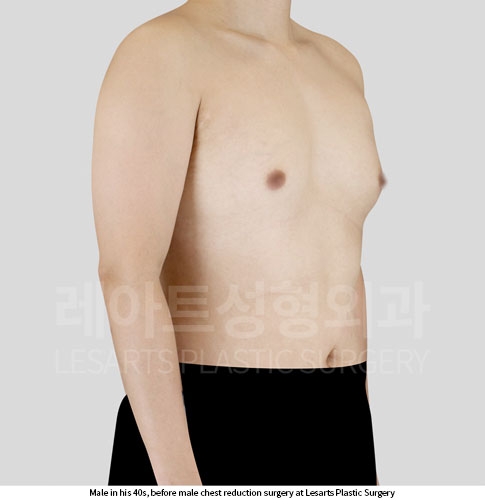
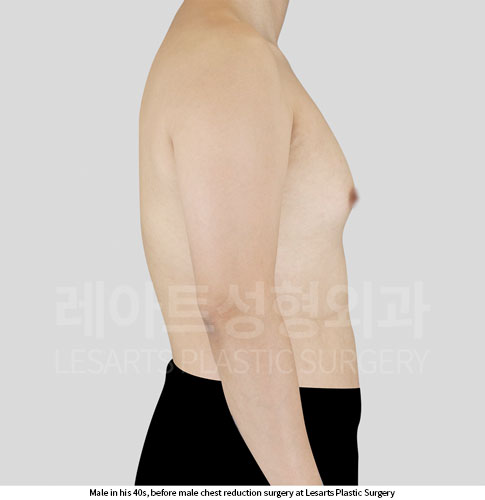
1. Visible protrusion on inspection
– The anterior chest was not flat,
with the central area protruding forward.
– The nipple–areola complex was enlarged,
standing out clearly through a T-shirt fit.
2. Glandular tissue on palpation
– A firm mass was palpated on examination.
– This was consistent with true gynecomastia
caused by fibrous glandular tissue overgrowth.
3. Ultrasound examination results
– Hyperplastic glandular tissue
was widely distributed beneath the nipples.
– Findings were clearly distinguishable
from the surrounding subcutaneous fat layer.
Based on these findings,
the patient was diagnosed with
true gynecomastia (Simon grade 2A)
caused by glandular tissue development.
A surgical correction plan was recommended,
combining gland excision
with lower and lateral chest liposuction
to achieve a balanced, masculine chest contour.
[Mid-40s, Simon grade 2A, male chest reduction surgery plan]
1. Glandular tissue removal
The glandular tissue,
the primary cause of chest enlargement,
was removed to achieve
overall size reduction.
Because the patient had been taking
hair loss medication (finasteride)
for the past 4–5 years,
the possibility of recurrence was carefully considered.
The importance of postoperative follow-up
and ongoing observation
was thoroughly explained.
2. Combined lower and lateral chest liposuction
In addition to glandular tissue,
fat accumulation in the lower
and lateral chest areas
contributed to chest prominence.
These areas were also refined
through liposuction,
resulting in a more balanced
and reduced chest contour.
3. Tissue repositioning and male chest contouring
After gland removal,
tissue was repositioned
to prevent depression
or an overly flat appearance.
This male chest contouring technique
was performed to create
a chest shape resembling
a naturally trained, athletic look.
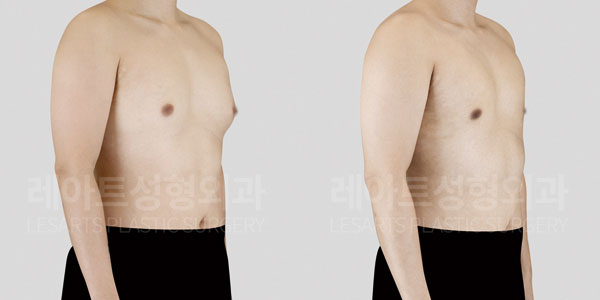
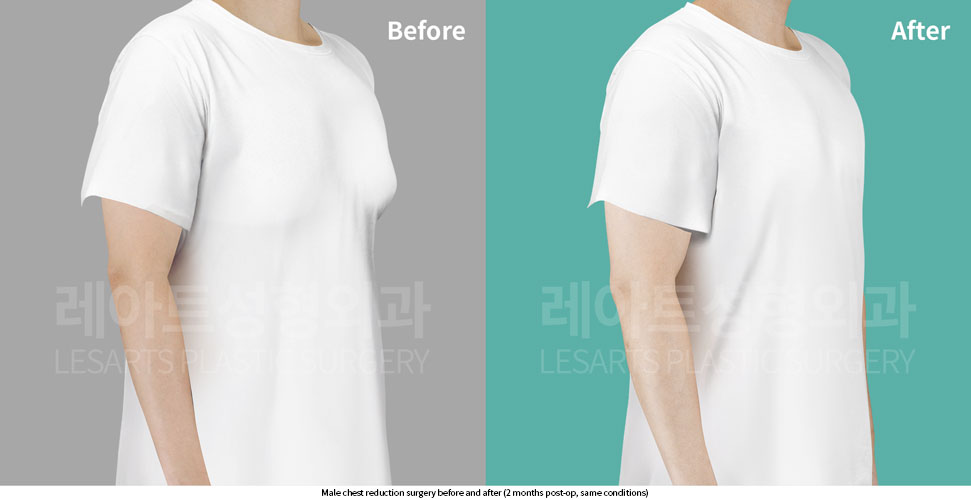
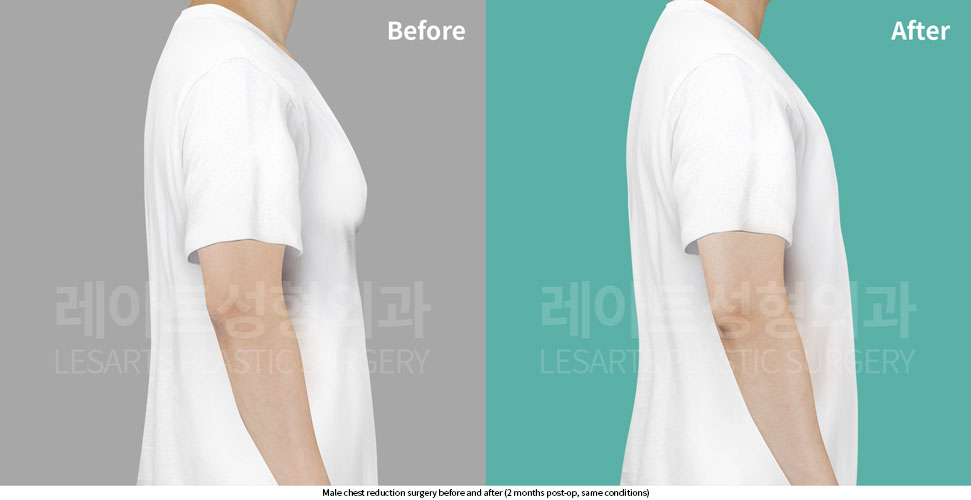
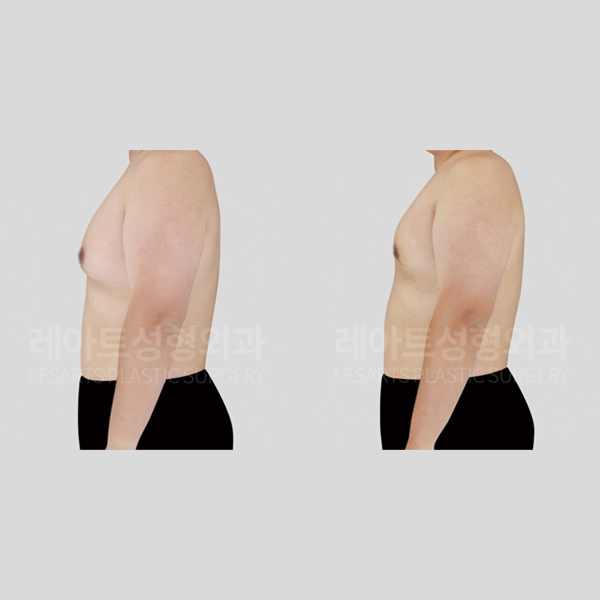
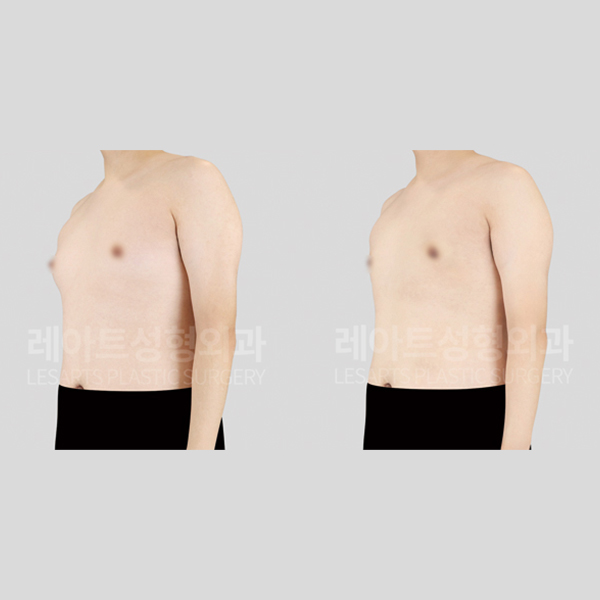
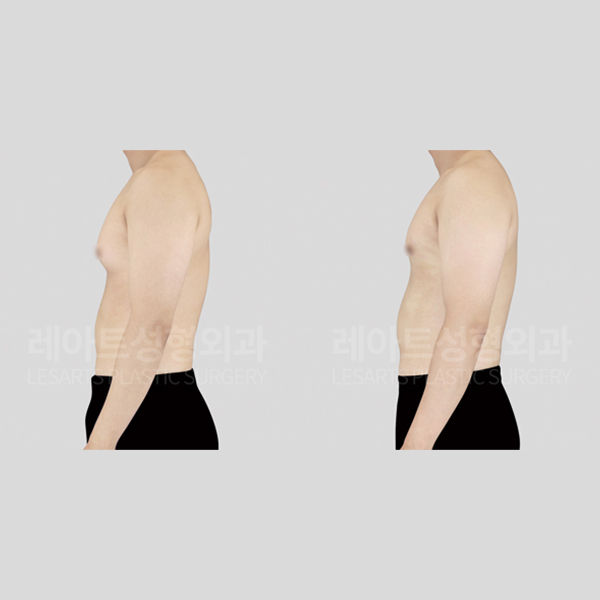
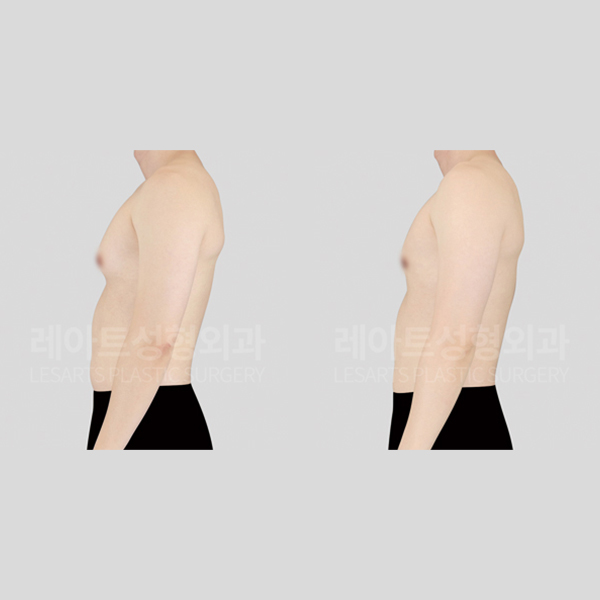
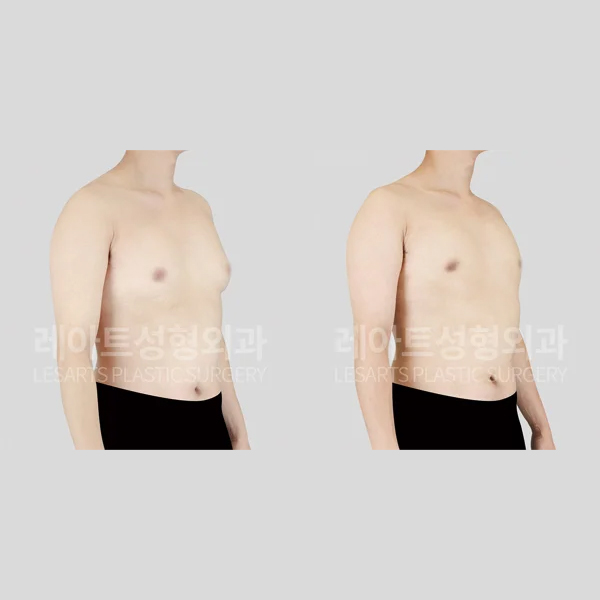
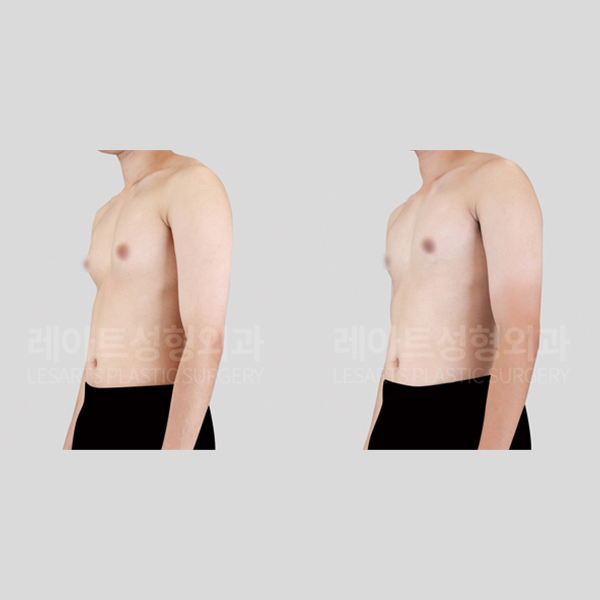
Through the before-and-after photos
of male chest reduction surgery,
we will review the treatment results
and improvement of gynecomastia symptoms.
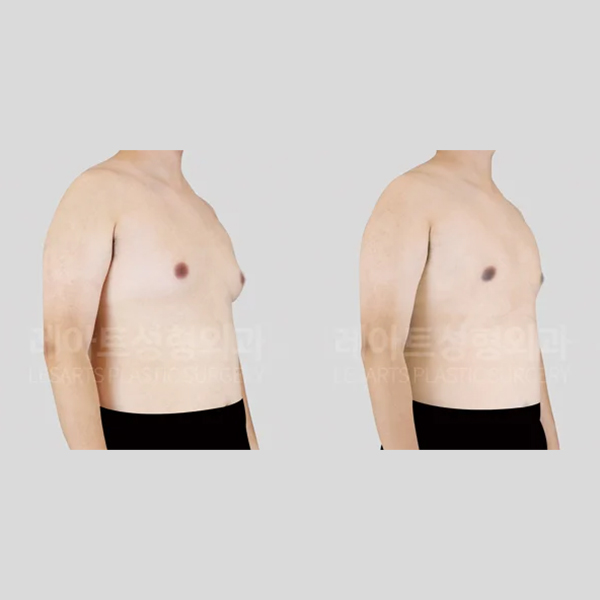
Before surgery, the enlarged chest and protruding nipples
created a dull and awkward upper body contour,
despite an otherwise average body frame.
Through gynecomastia surgery,
the chest size was reduced,
and both chest protrusion and nipple projection
were effectively corrected.
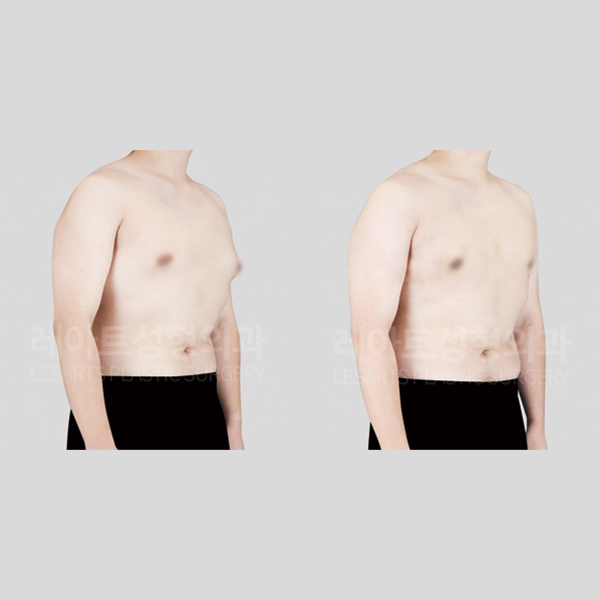
The chest now appears flat, firm, and naturally contoured,
with a smooth transition across the upper body.
In particular, the bulging beneath the nipples
has disappeared,
and the boundary flowing toward the abdomen
has become clean and seamless.
As a result, the previously uncomfortable appearance
has been completely resolved,
restoring a neat and masculine chest line.
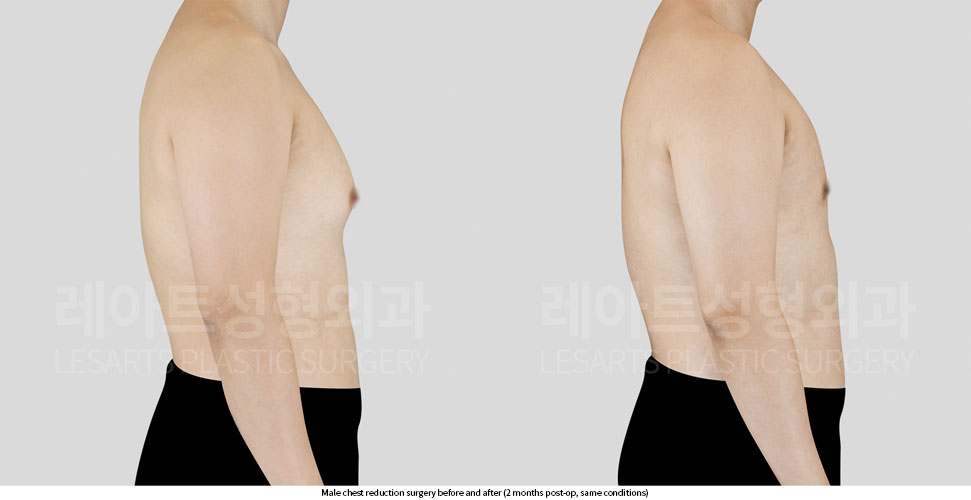
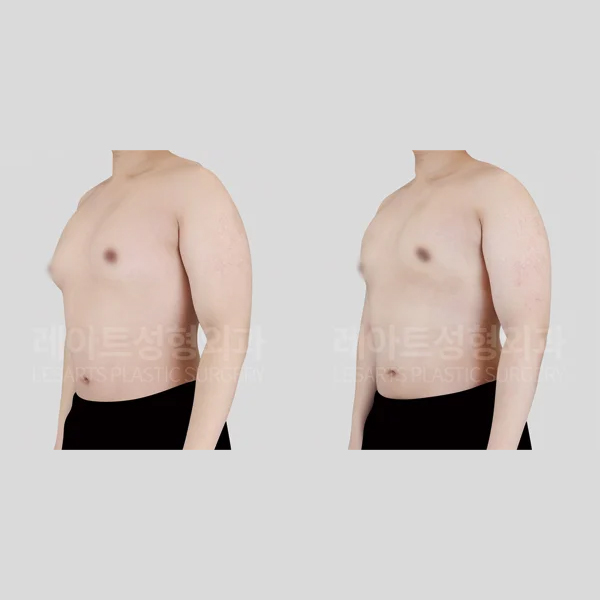
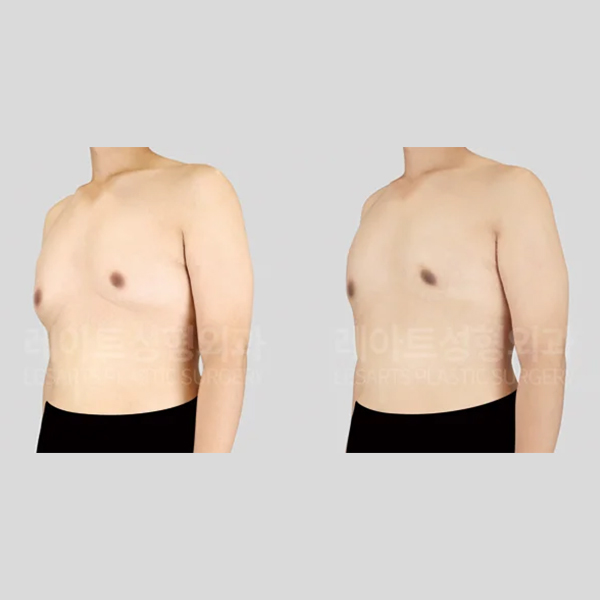
The male chest contouring effect
achieved through gynecomastia surgery
is clearly noticeable
in a light T-shirt fit
at 2 months post-op.
Before surgery,
chest protrusion was visible
even under thin clothing.
After chest reduction surgery,
a clean and firm upper chest line
creates the appearance
of a trained, masculine upper body.
As both the physical appearance
and psychological burden
caused by chest protrusion were relieved,
the patient’s overall satisfaction
was notably high.
Although the patient continued
taking finasteride after surgery,
follow-up evaluations confirmed
no discomfort
and no recurrent contour changes
in the chest area to date.
Gynecomastia can develop
due to medications, hormonal factors,
underlying conditions,
or weight changes.
For this reason,
accurate diagnosis, appropriate treatment,
and consistent follow-up care
are essential components
of long-term management.
#Gynecomastia
#GynecomastiaSurgery
#MaleChestReduction
#TrueGynecomastia
#SimonGrade2A
#FinasterideGynecomastia
#MaleChestContouring
#LesartsPlasticSurgery
#BestGynecomastiaClinic
#GynecomastiaKorea
#MalePlasticSurgeryKorea