Gynecomastia in Seoul: can teenage gynecomastia resolve naturally during puberty?
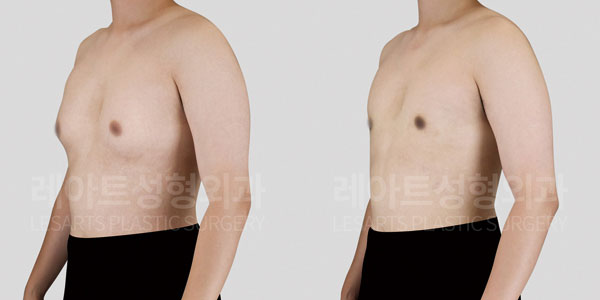
Patient Registration Info
| Age | Weight | Height | BMI |
|---|---|---|---|
|
30s |
69kg |
173cm |
23 |
Surgical site
Surgical area: Gynecomastia | Grade 2A
Gynecomastia most commonly first appears
during adolescence.
During this period, a temporary
hormonal imbalance between male
and female hormones can stimulate
the glandular tissue inside the chest,
causing it to swell and protrude.
In some cases, symptoms
naturally resolve as puberty ends,
but in many cases,
chest protrusion persists into adulthood,
leading patients to visit a clinic.
Today, we will explain
a gynecomastia surgery case
of a patient whose symptoms
began during adolescence
and did not resolve naturally,
resulting in surgical treatment
in adulthood.

The patient first noticed chest protrusion
in his early teens,
during a period of significant weight gain.
Even after attempting weight loss
to improve gynecomastia symptoms,
the chest area remained prominently bulged,
causing long-term psychological stress.
On examination of the chest shape,
both sides showed distinct volume,
with enlarged nipples and areola,
making the chest appear swollen and protruding.
On palpation, firm tissue was detected,
raising suspicion of glandular tissue development.
Through ultrasound examination,
excessively developed glandular tissue
was confirmed in both sides of the chest.
The patient was diagnosed with
true gynecomastia, Simon grade 2A,
requiring gland excision surgery
combined with chest liposuction.
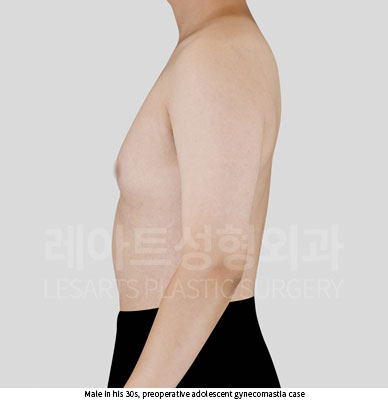
[Early 30s, Simon grade 2A, gynecomastia surgery approach]
1. Gland excision
The glandular tissue, developed since adolescence,
was identified as the primary cause
of the enlarged chest appearance.
A precise periareolar incision was planned
to remove the glandular tissue
along the natural areola line.
2. Combined chest liposuction
Fat from the lower and lateral chest
was removed through liposuction
to lighten the overall upper body proportion.
This design allowed a smooth transition
from the chest to the torso,
creating a more natural chest contour.
3. Tissue stabilization and adhesion prevention
To prevent postoperative depression or irregularity,
the connective tissue was securely supported.
Anti-adhesion measures were applied
to minimize skin tightening
and contour distortion during recovery.
Next, we will review
the postoperative chest contour changes
achieved through gynecomastia surgery.
The patient visited our clinic
due to chest enlargement
that had been a concern
since adolescence.
Although gynecomastia symptoms
had persisted for many years,
skin elasticity remained relatively good,
so concerns about postoperative sagging
were minimal when planning
gland excision and fat removal.
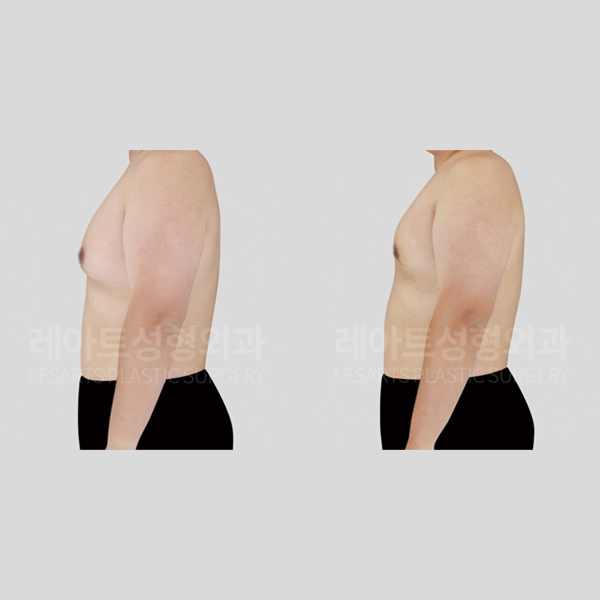
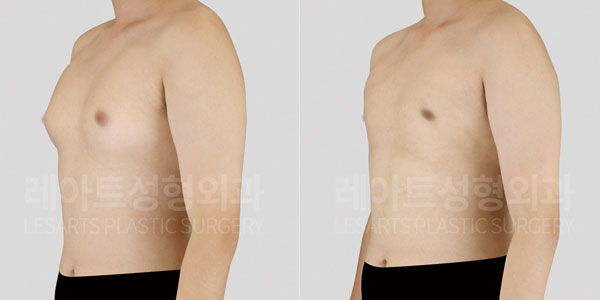
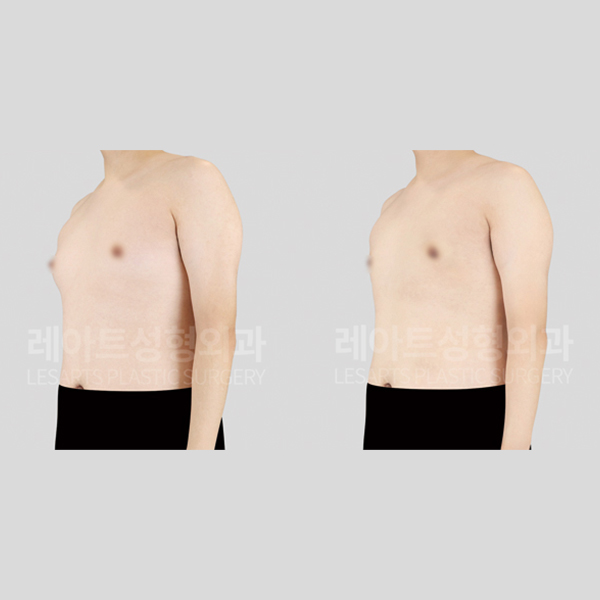
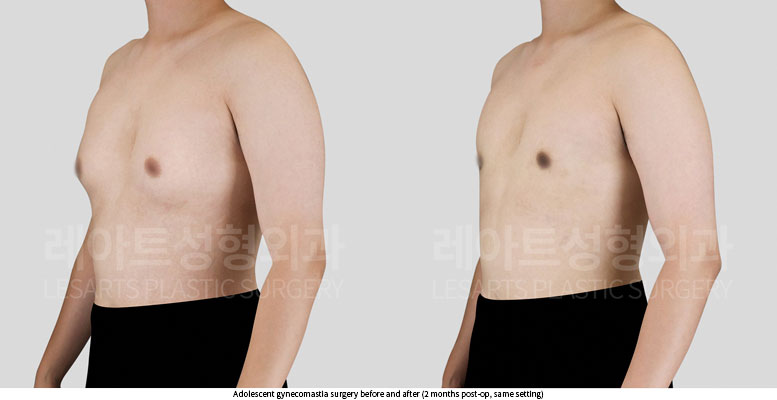
At 2 months after gynecomastia surgery,
a clear reduction in chest volume
can be observed following
glandular tissue removal.
The previously protruding nipple
and areola complex
has also been refined
into a cleaner, more balanced shape.
The upper body,
which once appeared bulky and awkward,
has transformed into
a flat, masculine chest contour.
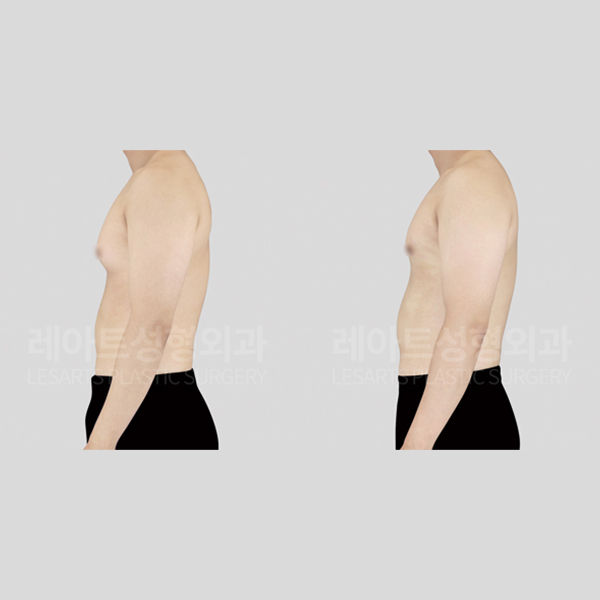
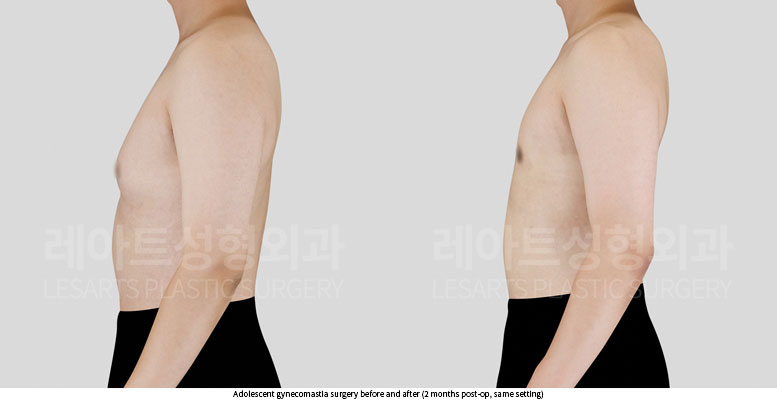
Before surgery,
the chest showed upper fullness
with downward heaviness.
After surgery,
the chest has been corrected
into a balanced, flat contour,
allowing the chest and abdomen
to connect naturally
in a smooth, stable line.

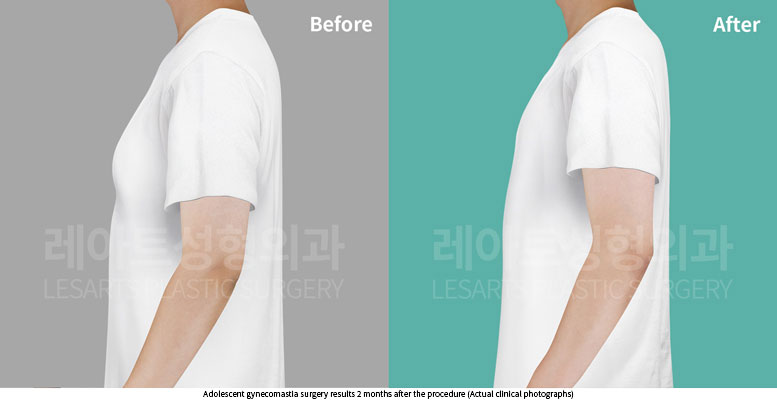
Before surgery, chest enlargement
and nipple protrusion were clearly visible
even through a T-shirt.
Through gynecomastia surgery,
these concerns were completely corrected.
With a more natural T-shirt fit,
the chest line now falls flat,
and protrusion is visibly reduced.
In most cases, adolescent gynecomastia
occurs due to temporary hormonal changes.
However, not all cases
resolve naturally over time.
Because of this,
some teenage patients
visit the clinic early
with their parents,
while others seek consultation
as adults,
sharing concerns carried
since their teenage years.
For adolescent gynecomastia patients,
a follow-up observation period
of approximately 6 months
is required before treatment,
along with careful consultation
with both the patient
and their guardian.
This patient entered his 30s
and chose to finally address
a long-standing physical concern
that began during adolescence.
If pubertal gynecomastia
does not resolve over time,
seeking accurate diagnosis
and professional consultation
can be a helpful step.
Most importantly,
when long-standing chest protrusion
is corrected,
patients often regain
self-confidence
and daily comfort.
Gynecomastia is not simply
an aesthetic issue.
It is a process of restoring
physical balance
and improving quality of life.
If discomfort has persisted,
rather than worrying alone,
we recommend consulting
a qualified specialist
for an accurate evaluation.
#GynecomastiaSurgery
#TrueGynecomastia
#AdolescentGynecomastia
#MaleChestContouring
#GlandExcision
#ChestLiposuction
#SimonGrade2A
#MensPlasticSurgery
#LesartsPlasticSurgery
#KoreaPlasticSurgery
#BestGynecomastiaClinicInKorea