Gynecomastia :What changes can you expect 2 months after gynecomastia surgery?
Hello, I’m Dr. Kukhan Lee,
a board-certified plastic surgeon at Lesarts Plastic Surgery.
When consulting patients about gynecomastia surgery,
there is one question I hear most often:
“Will surgery really make a noticeable difference?”
Because many patients have lived for years
with a prominent chest contour,
it can be difficult to imagine
how their chest will look after surgery.
However, in reality,
most patients report high satisfaction
with the change in chest shape
starting immediately after surgery.
That said, results can vary from person to person,
and several factors play an important role:
– Preoperative breast (chest) size
– Degree of skin laxity and elasticity
– Position of the nipple–areola complex
In this post,
we’ll review the actual recovery timeline
of a commonly seen case—
a Simon grade IIa gynecomastia patient—
and examine how changes occur over time after surgery.
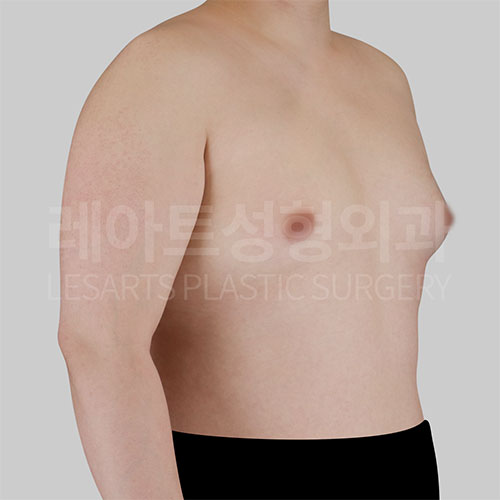
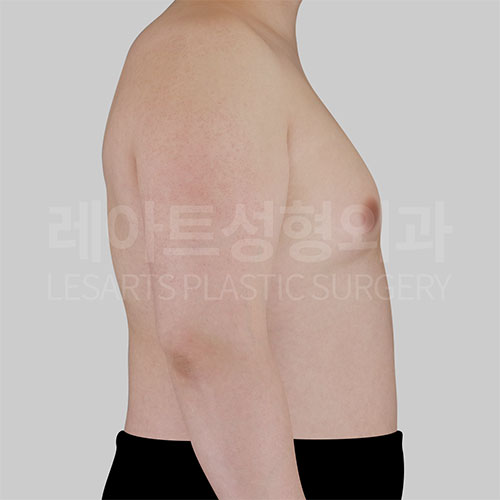
Lesarts Gynecomastia Surgery – Before Surgery
Lesarts Gynecomastia Surgery – Before Surgery
Preoperative Condition
Simon grade IIa
Height: 175 cm / Weight: 101 kg
This patient visited us
due to long-standing chest protrusion and fullness
that had persisted since adolescence.
He reported that his chest began to enlarge
during elementary school,
along with weight gain.
Even after losing weight down to 66 kg,
the chest enlargement did not significantly improve.
As his weight increased again later on,
the chest volume also increased,
which ultimately led him to seek treatment.
Based on ultrasound examination and physical evaluation,
he was diagnosed with mixed-type gynecomastia (Simon grade IIa),
characterized by both glandular tissue and fat development.
Preoperative Diagnosis – Dr. Kukhan Lee
Key Preoperative Features
– Enlargement of the lower pole of the breast
– Fat accumulation along both lateral chest areas
– Areolar bulging and enlargement due to glandular hyperplasia
– Relatively good skin elasticity despite weight fluctuations
– Nipple–areola position maintained without severe sagging
Based on these findings,
we performed subcutaneous mastectomy
combined with bilateral lateral chest liposuction.
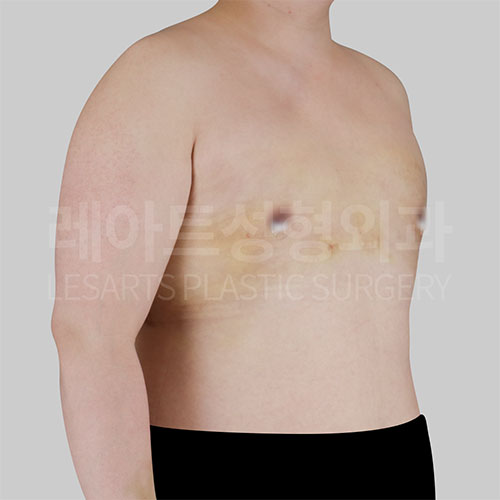
Lesarts Gynecomastia Surgery – 2 Weeks Postoperative
Postoperative Progress at 2 Weeks
At two weeks after gynecomastia surgery,
general swelling and bruising are still present.
Even so,
a clear reduction in the volume of the lower breast
can already be observed,
and overall changes in chest contour
become noticeable at this stage.
Many patients feel satisfied with the improvement
even at this early point.
However, as swelling continues to subside
and the skin gradually contracts,
the chest contour becomes even more natural over time.
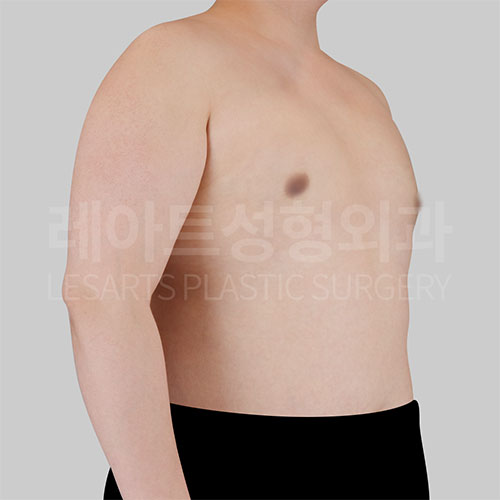
Lesarts Gynecomastia Surgery – 2 Months Postoperative
Postoperative Progress at 2 Months
Around two months after surgery,
most major swelling and bruising have resolved,
and a more natural chest contour is established.
At this stage, we typically observe:
– A flattened and well-defined lower breast area
– Improved stability of the chest line due to reduced lateral chest fat
– A relative upward repositioning of the areola, creating a subtle lifting effect
As a result,
the overall chest appearance becomes
clearly more masculine.
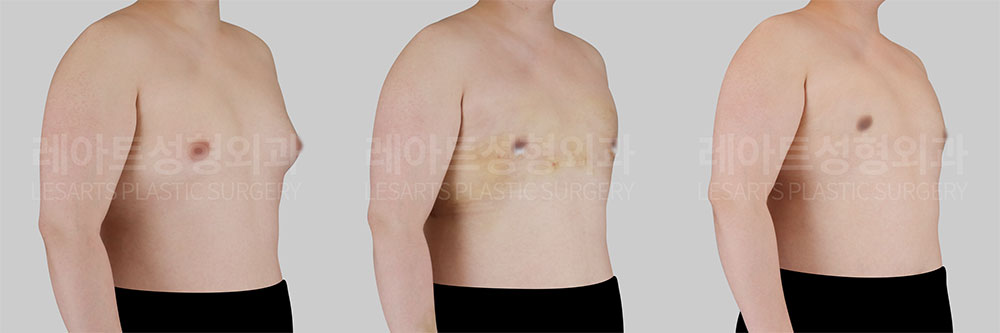
Changes in Areola Size and Color
After gynecomastia surgery,
the areola often appears smaller than before surgery.
This occurs because the glandular tissue
beneath the areola is removed,
flattening the area and naturally reducing
the stretched areolar diameter.
During this process,
the areola may temporarily appear darker,
which is a natural phenomenon caused by
pigment concentration
as the areolar size decreases.
Lesarts Gynecomastia Surgery
Before → 2 Weeks → 2 Months
Scar Changes
The incision scar from gynecomastia surgery
is placed along the border
between the areola and surrounding skin.
Because of this location,
the scar often becomes hard to detect visually
by around two months after surgery.
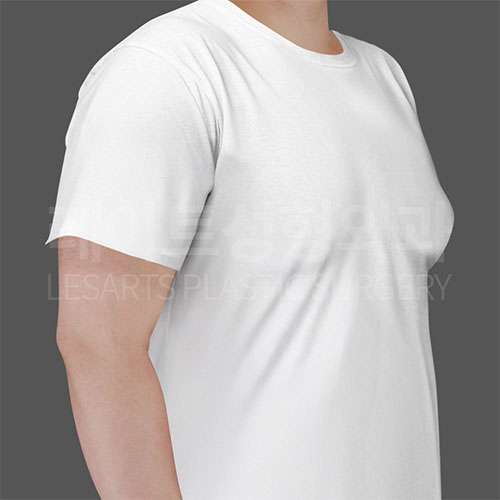
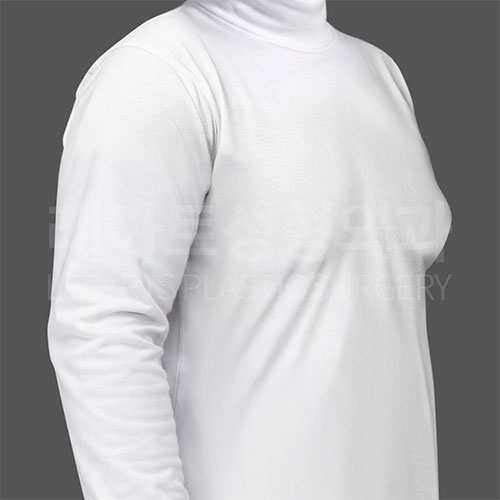
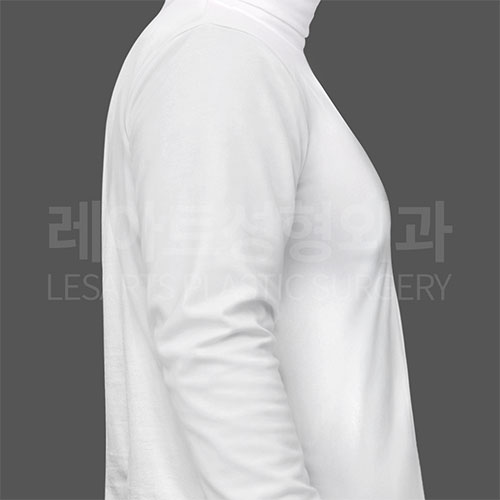
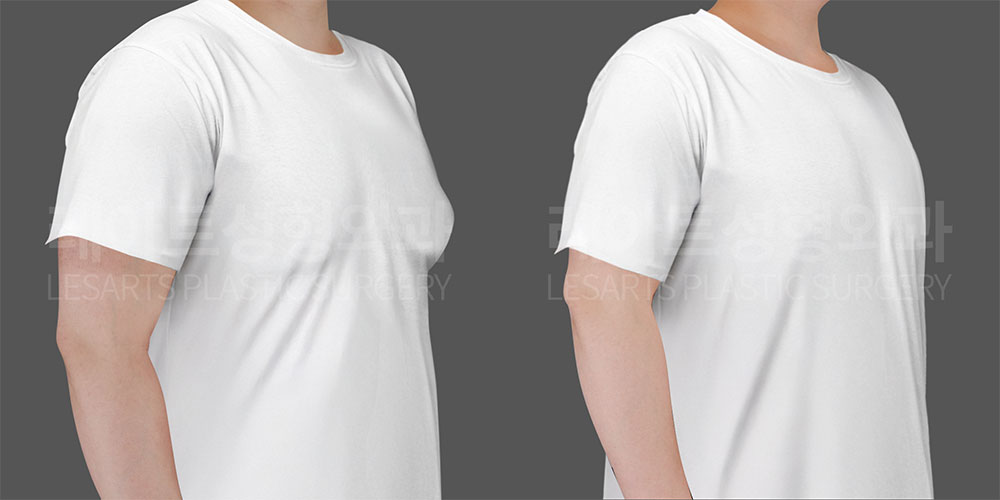
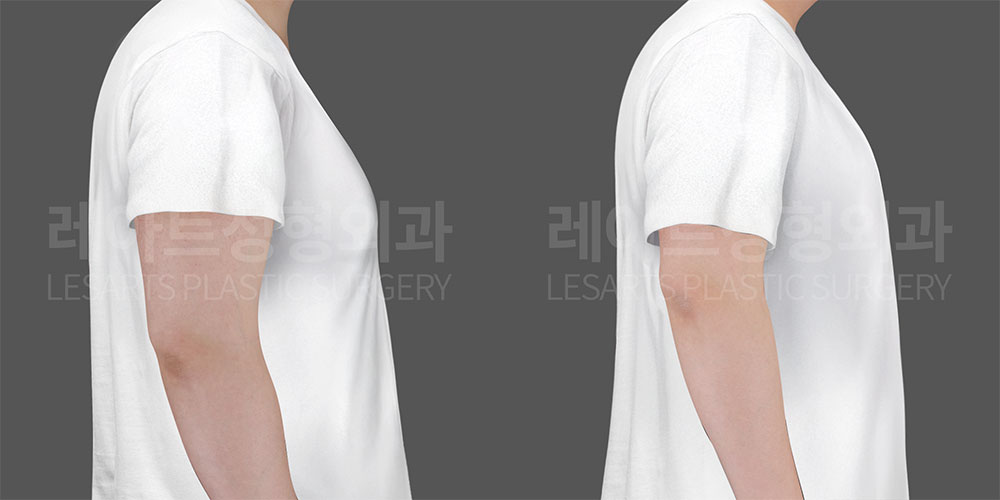
Clothing Fit Changes at 2 Months Postoperative
-Short-sleeve cotton T-shirt fit after surgery
-Turtleneck knit fit after surgery
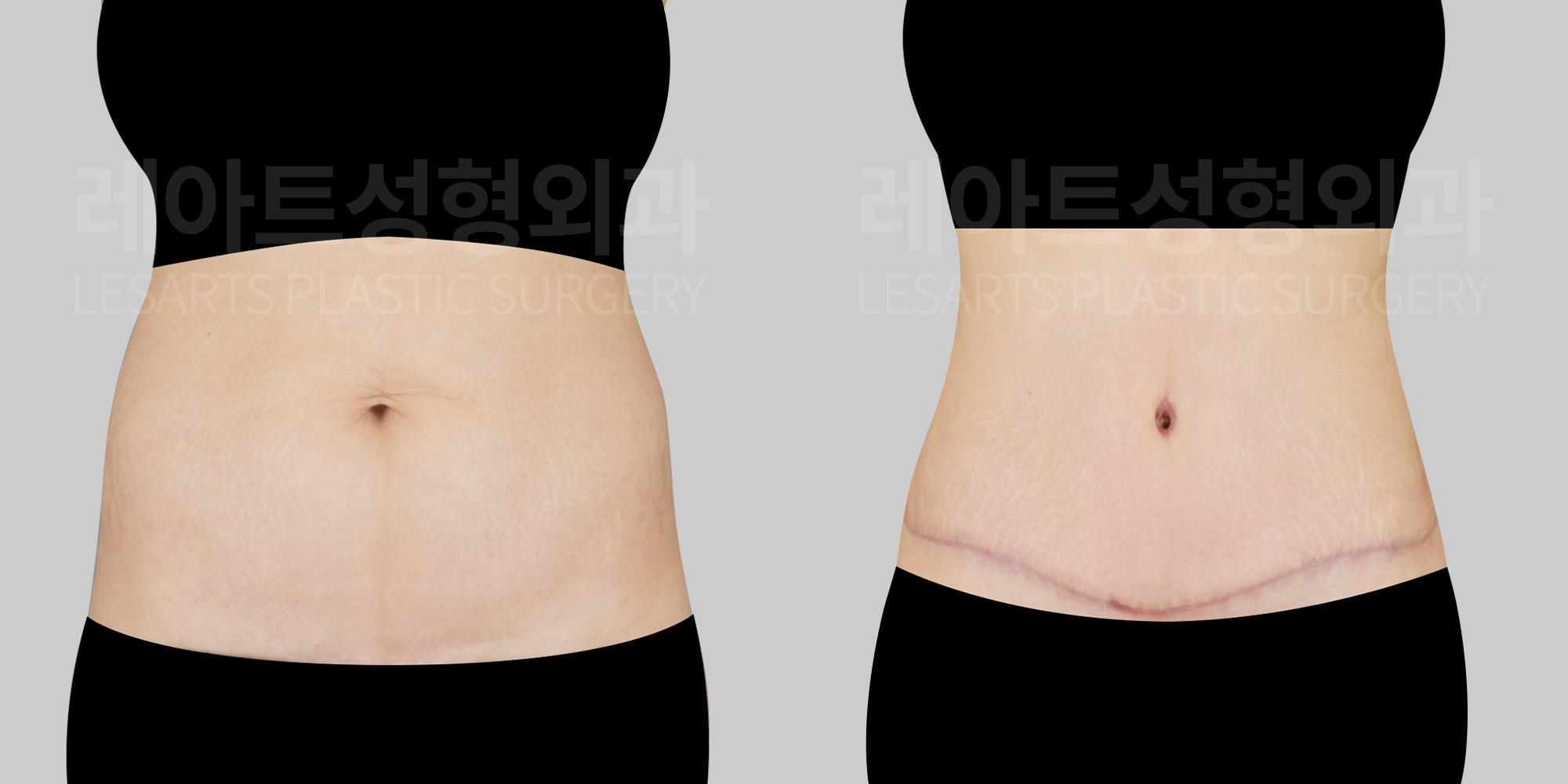
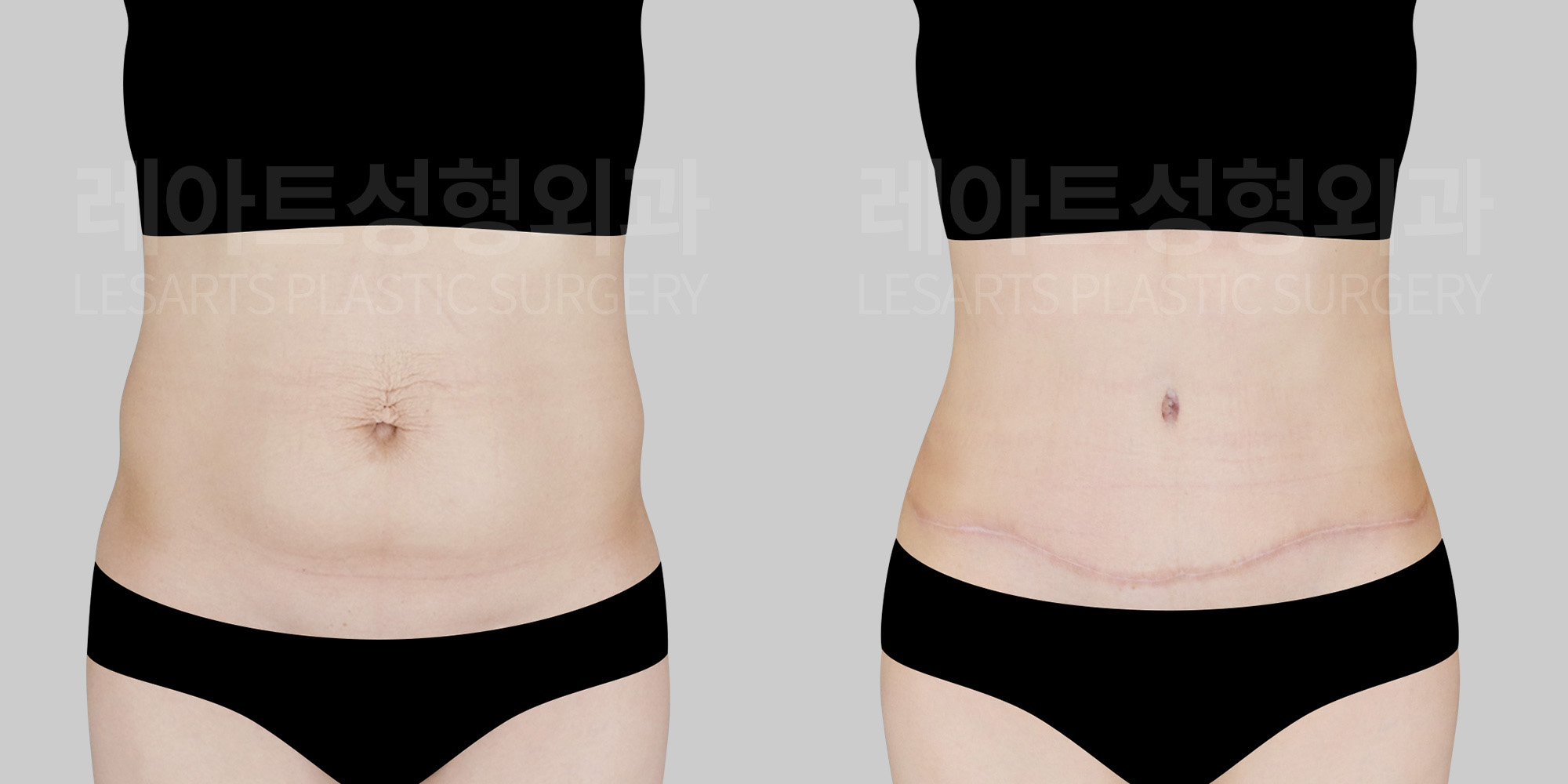
This patient’s main concerns were
lower abdominal bulging and skin laxity.
Because she often wears outfits that expose the navel,
she especially wanted clear improvement
in the skin laxity above the belly button.
As time passes:
– Residual swelling gradually resolves
– Bio-bond material is absorbed and organized
– Chest contours become increasingly natural
– Areas of tightness or discomfort improve
– Sensation gradually returns
Final Thoughts
Gynecomastia surgery is a procedure
that requires consideration not only of immediate results,
but also of the long-term recovery process.
Therefore, it is essential to establish
a surgical plan and timeline
based on thorough consultation,
taking into account the cause and severity of gynecomastia,
as well as each patient’s lifestyle.
In cases like this—
where skin elasticity is relatively well preserved
and sagging is not severe—
subcutaneous mastectomy combined with liposuction
can provide highly satisfactory results.
If gynecomastia is causing discomfort
in daily life or ongoing concerns about body shape,
we recommend consulting with a specialist
to receive a comprehensive explanation
of your current condition and recovery expectations.
Only a treatment plan tailored to the individual
can lead to truly satisfying results.



![[Abdominoplasty]3 Months After L-Type Extended Abdominoplasty](https://lesartsps.com/wp-content/uploads/2026/06/tummy-tuck-31922-bna-bending.jpg)


