Creating a smooth abdomen-to-pelvis curve: Why you look much slimmer even though your weight is the same
Hello, this is Dr. Choi Pyongrim from Lesarts Plastic Surgery.
Even with little to no
change in body weight,
the silhouette you see
in the mirror can feel
completely transformed.
This is the part many
female patients in their 20s
find most surprising and
most satisfying after
abdominal liposuction combined with
pelvic and hip fat grafting.
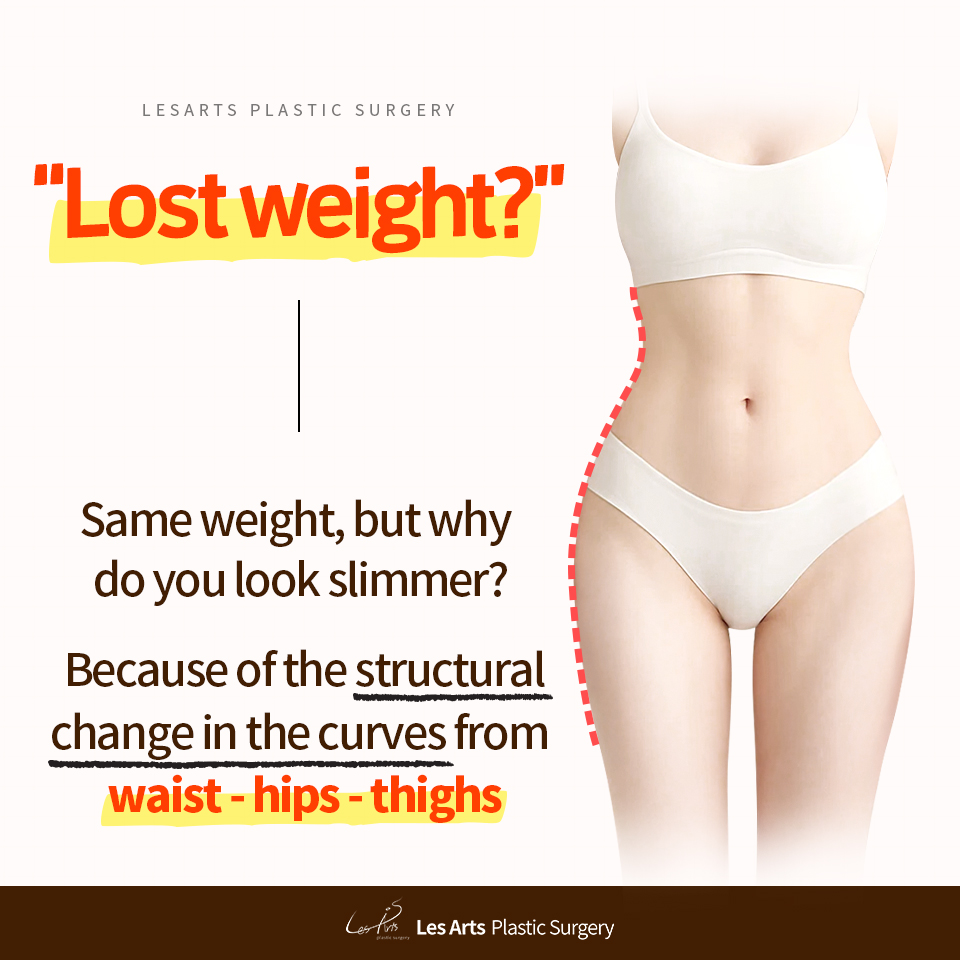
What we commonly describe as
“looking slimmer”
is influenced less by
actual body weight
and more by structural changes
in the curves connecting
the waist, pelvis, and thighs.
By precisely refining abdominal fat
to create a defined waist,
and smoothly filling areas of
insufficient pelvic volume
and hip dips,
the number on the scale
may stay the same,
yet a dramatically slimmer-looking
visual body transformation
is created.
In this article, we will explain
from the abdominal line
to the pelvic curve,
why liposuction and fat grafting alone
can change the overall silhouette,
and how anatomical analysis
and design strategies make this possible,
illustrated through real patient cases.
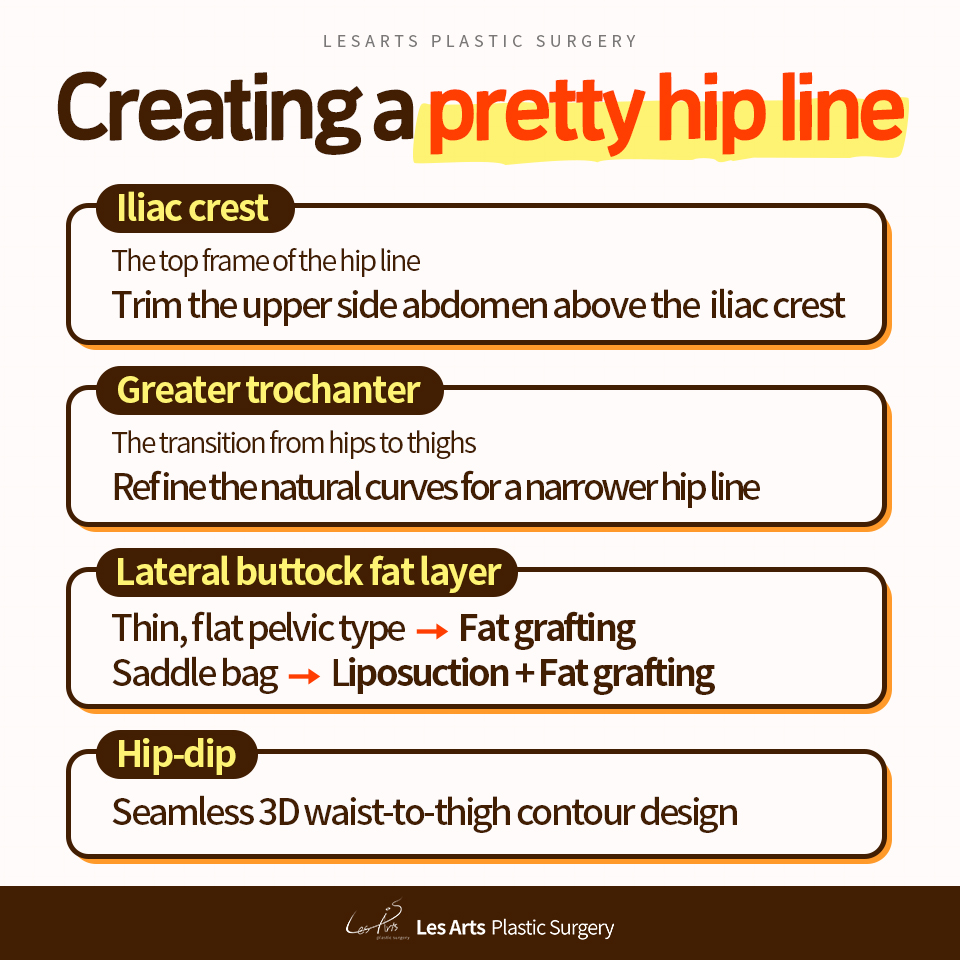
1. Basic anatomy for understanding the pelvic line
To understand what makes
a pelvis look well balanced,
we must consider not only
the amount of fat,
but also bone structure,
muscle positioning,
fat layer thickness,
and skin elasticity together.
A. Iliac crest
The uppermost frame
of the pelvic line
For the waist to appear
more defined and
the pelvis wider,
balanced removal of
lateral abdominal fat
above the iliac crest
is essential.
B. Greater trochanter
The transition point
from pelvis to thigh
Bulging in this area
is a major reason
the pelvis appears narrow.
Delicate adjustment is needed
to allow a smooth,
natural curve to flow.
C. Lateral gluteal fat layer thickness
Pelvic shapes vary
from person to person
Flat pelvis with
thin fat layers
→ volume enhancement
through fat grafting
Saddlebag-type pelvis
→ a combination of
liposuction and
hip fat grafting
is most effective
D. Hip dip
The key to
the cola-bottle silhouette
Hip dips result from
structural anatomy,
so rather than simply
filling the indentation,
it is important to create
a natural 3D curve
connecting the waist,
pelvis, and thighs seamlessly.
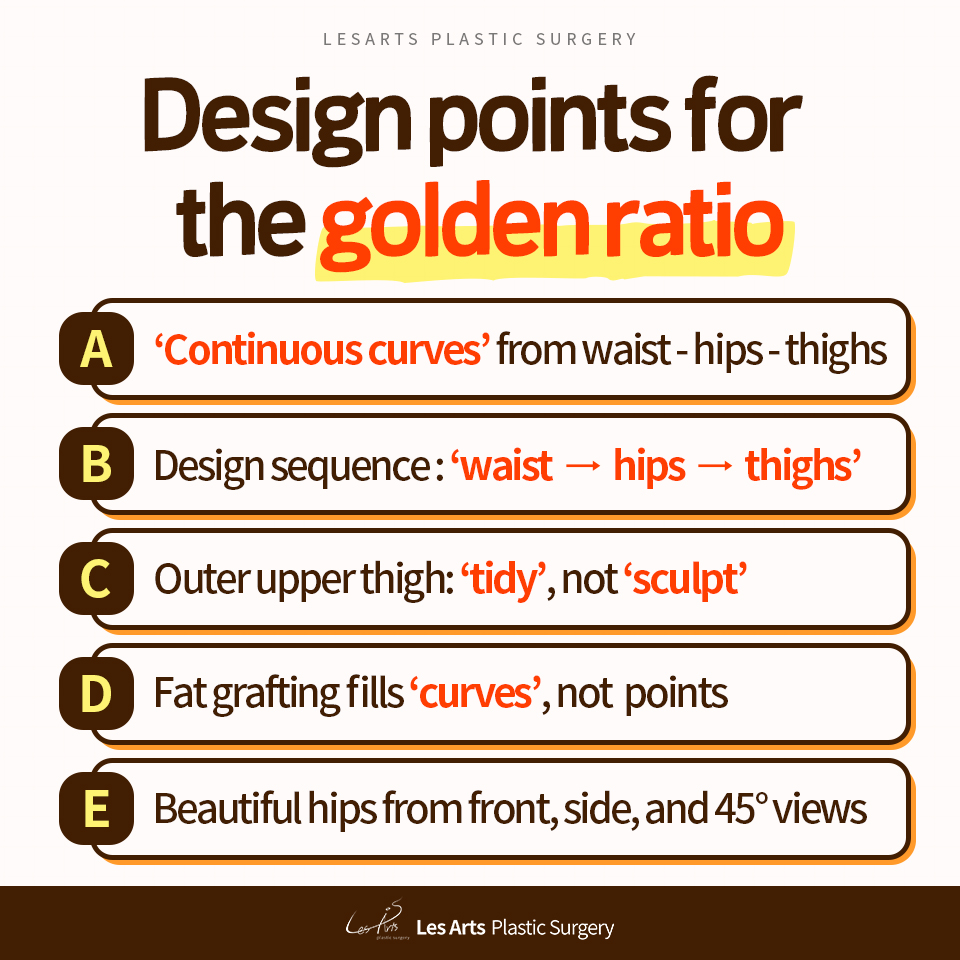
2. Design points that transform body proportions
A. Creating a continuous waist-to-pelvis-to-thigh curve
By slimming the waist through abdominal liposuction,
the pelvis appears wider than it actually is,
maximizing visual contrast and balance.
The key is designing a smooth flow
from the lateral abdomen to the upper pelvis,
through the hip dip,
and into the outer thigh.
B. Design sequence: always waist first
The waist must be refined first
for the pelvic line to truly stand out.
Especially in women in their 20s,
liposuction alone can create
a noticeable pelvic expansion effect.
C. Upper outer thighs: refinement over reduction
Rather than aggressively removing volume,
excess fullness is reduced,
depressed areas are subtly filled,
allowing the curve to flow naturally.
This contour-focused design approach
prioritizes balance over excessive subtraction.
D. Fat grafting fills curves, not points
Because the hip joint and lateral buttock
form a curved anatomical surface,
three-layer fat grafting
in the deep, middle, and superficial layers
produces the most natural, long-lasting results.
E. A pelvis that looks beautiful
from every angle
The pelvis should not look good
from only one viewpoint.
Balanced volume must be designed
from the front, side, and 45-degree angles
to create a truly refined pelvic line.
3. How does this translate into actual surgery?
[Patient profile]
Female, mid-20s : 161 cm / 58.5 kg / 22.5
[Patient’s goal]
“To strongly define my waistline
and achieve an overall slimmer abdomen.”
[Surgical scope and plan]
– Abdominal liposuction
– Outer thigh saddlebag liposuction
– Hip and pelvic fat grafting
Although the patient requested
overall abdominal improvement,
her pelvic line appeared flat,
limiting silhouette definition.
By refining the lateral abdomen
and outer thigh saddle area,
we focused on shaping
a clearer silhouette,
then enhanced pelvic volume
through targeted fat grafting,
maximizing the overall
curved contour effect.
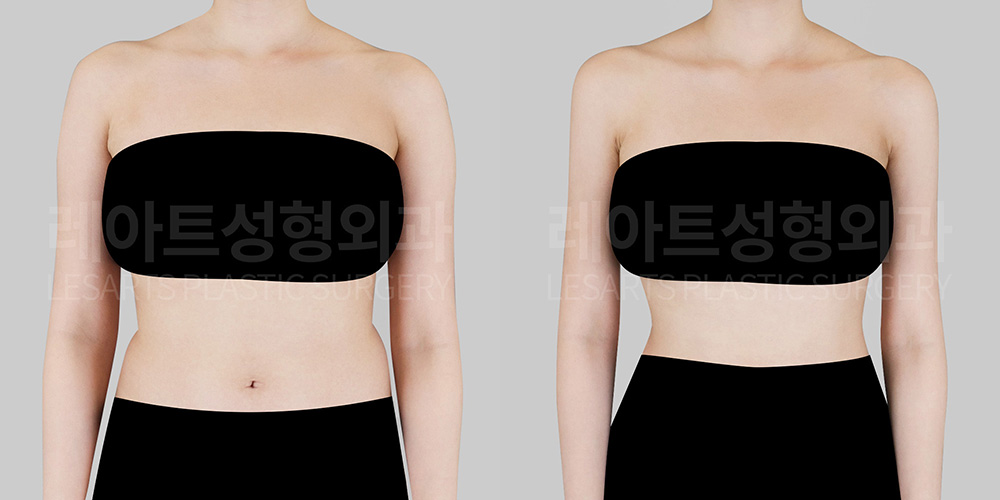
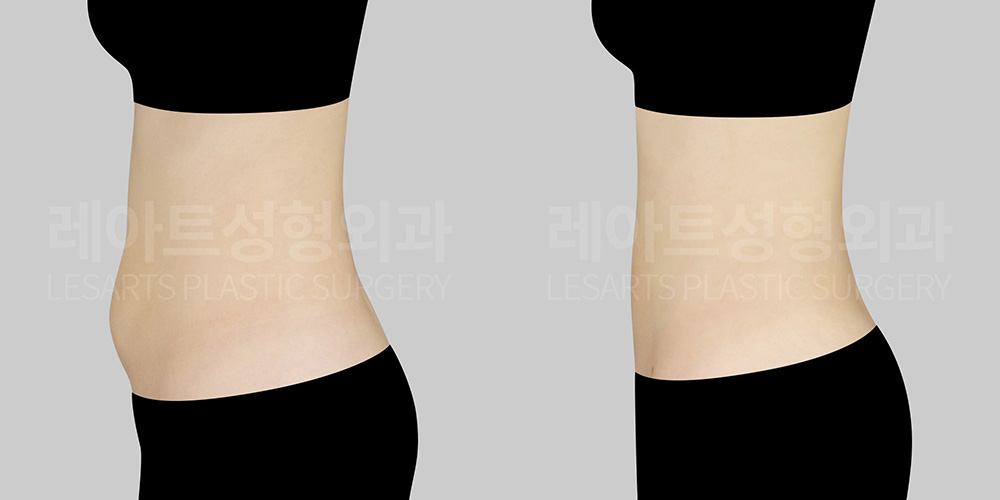
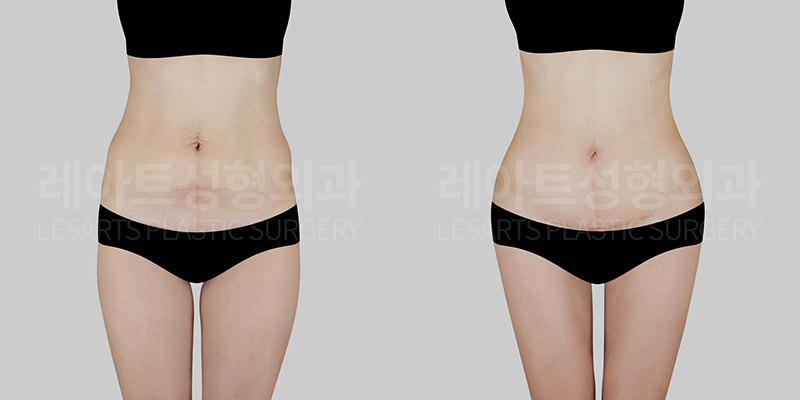
[Before and after comparison]
Before surgery / 2 months after surgery
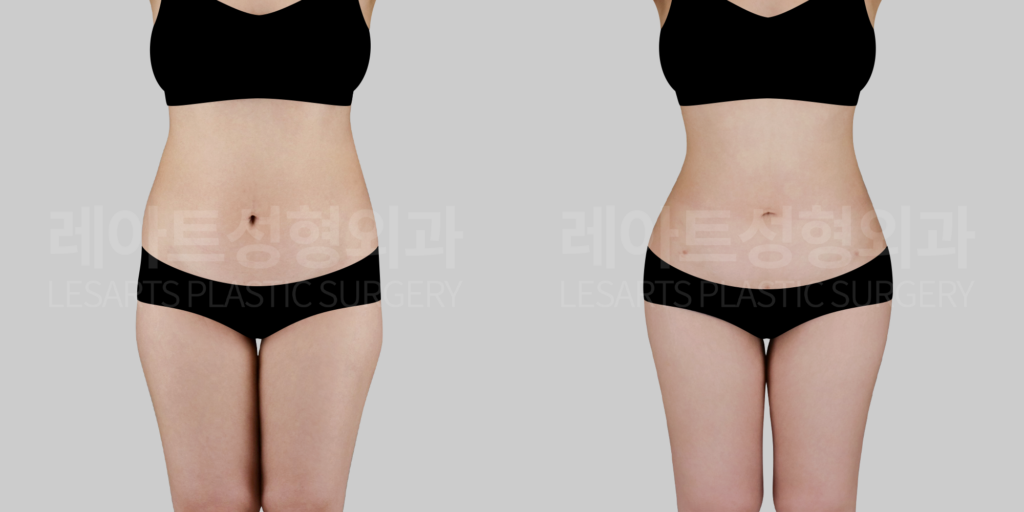
Lesarts abdominal and outer thigh liposuction with pelvic and hip fat grafting – front view
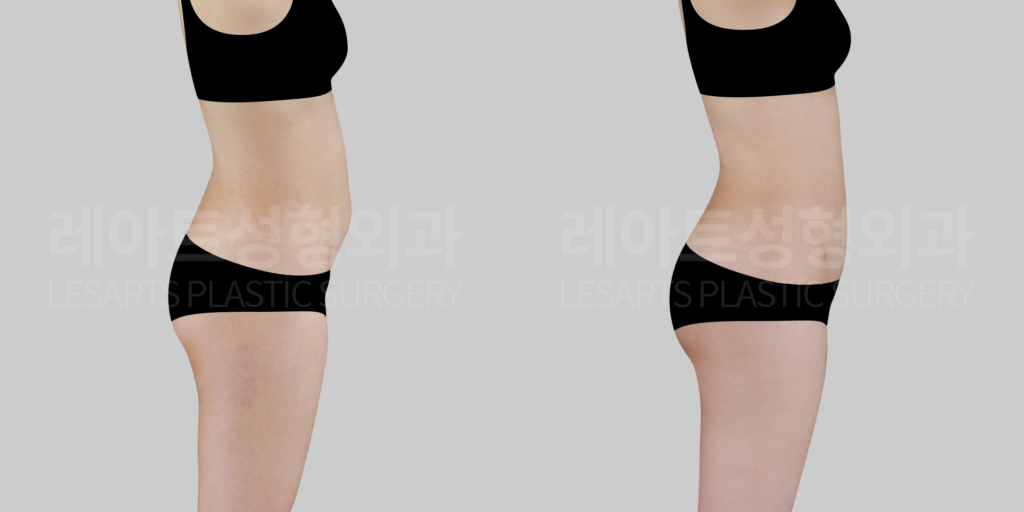
Lesarts abdominal and outer thigh liposuction with pelvic and hip fat grafting – side view
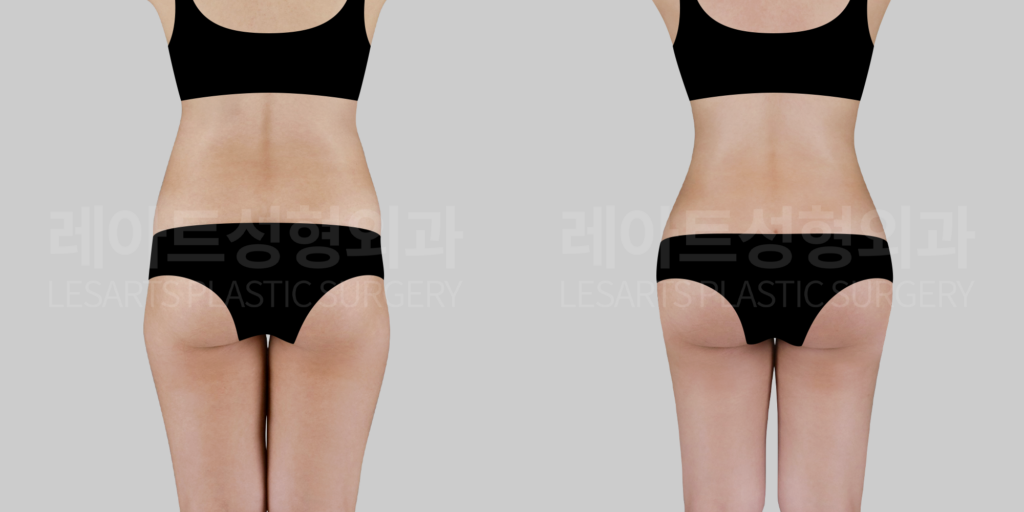
Lesarts abdominal and outer thigh liposuction with pelvic and hip fat grafting – back view
A maximally defined waistline
achieved through abdominal liposuction
A smoothly refined upper outer thigh
with excess fat carefully contoured
A visibly wider pelvic line
created through pelvic and hip dip fat grafting
As a result,
before and after abdominal
and outer thigh liposuction
with pelvic fat grafting,
there was little to no
change in body weight,
yet the waist–pelvis–thigh line
became more refined and balanced,
creating a strong impression
of improved overall proportions.
The body appears noticeably slimmer,
and clothing fit shows
a visible improvement as well.
The reason the silhouette changes completely
even when weight stays the same
lies in design that reshapes
the body’s structural balance.
Abdominal liposuction combined with
pelvic and hip fat grafting
is not simply about removing
or adding fat,
but about redesigning the flow
from waist to pelvis to thighs.
At Lesarts,
we apply a 3D body contouring
design system,
considering individual fat layer thickness,
pelvic width, and skin elasticity
to create the most harmonious lines.
Consult with our medical team
to see whether your body shape
can become slimmer, smoother,
and more beautifully contoured
without any change
in body weight.