Tummy tuck Korea: Correcting Postpartum Belly Sagging & Adhesions at Lesarts
Patient Registration Info
| Age | Weight | Height | BMI |
|---|---|---|---|
|
40s |
63kg |
158cm |
25 |
Surgical site
Surgical site : Abdomen, Saddlebags, S-Type, Muscle Repair, Umbilical Float | liposuction volume : 2,900cc
After childbirth or significant weight changes,
the abdomen often becomes protruded
or shows noticeable sagging.
Depending on the individual,
skin elasticity may recover poorly
or improve very slowly.
In many cases, this is not only
due to skin laxity itself,
but also occurs together with
diastasis recti,
leading to complex changes
in overall abdominal shape.
When these symptoms persist
for a long period of time,
self-care alone often has limits
in achieving fundamental improvement,
which is why more people
are considering abdominoplasty.
However, deciding on surgery
based solely on high expectations
for correction should be avoided.
Abdominoplasty involves
a long incision and
inevitable scarring,
making accurate diagnosis,
selection of an appropriate surgical method,
and a thorough understanding
of the recovery process
extremely important.
[Patient information]
Age: Late 40s
Height: 158 cm
Weight: 63 kg
BMI: 25
Even with similar physical characteristics,
surgical results may vary depending on the individual.
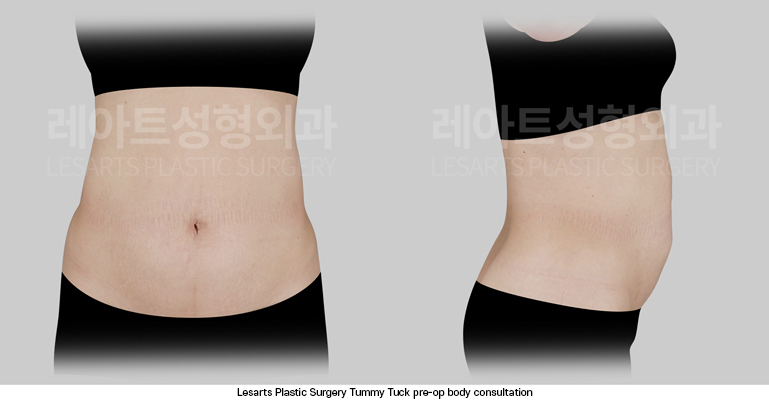
The patient experienced abdominal protrusion
and contour deformation
after two cesarean deliveries.
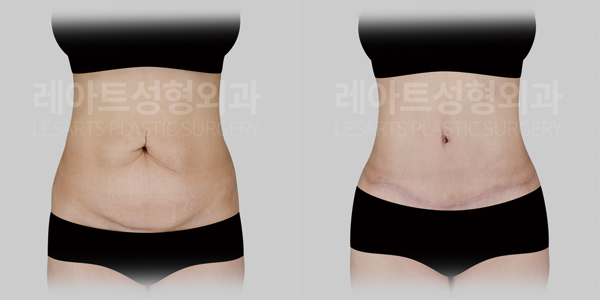
In particular, there was severe adhesion
in both the upper and lower abdomen,
making the skin surface appear uneven.
Above the C-section scar,
overlapping skin folds and wrinkles
were clearly visible.
Although the patient had relatively
good skin elasticity,
the adhesions and scarring
caused an imbalanced abdominal shape
that appeared unnatural overall.
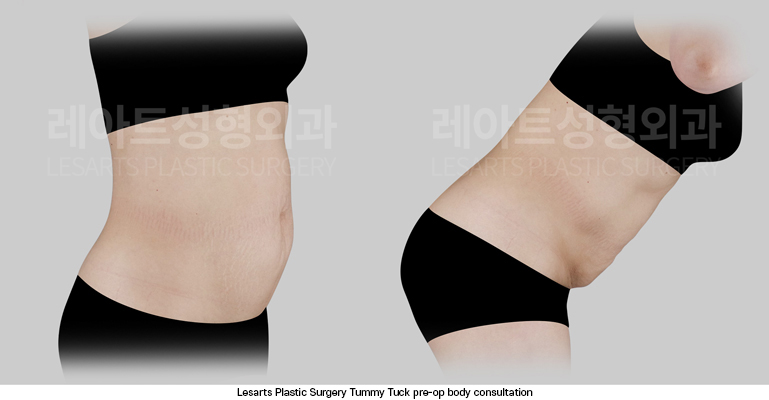
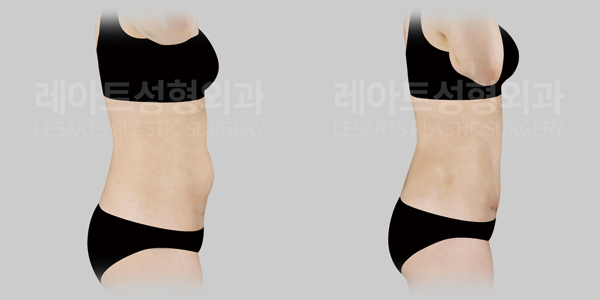
Especially from the semi-oblique view,
the front abdomen suddenly protruded
below the upper abdomen,
with the bulging extending
down into the lower abdomen.
The shape of this protrusion
appeared uneven,
as adhesions pulled on
the skin and subcutaneous tissue,
creating a bumpy surface.
Although skin elasticity
was relatively good,
diastasis recti prevented
proper abdominal wall support.
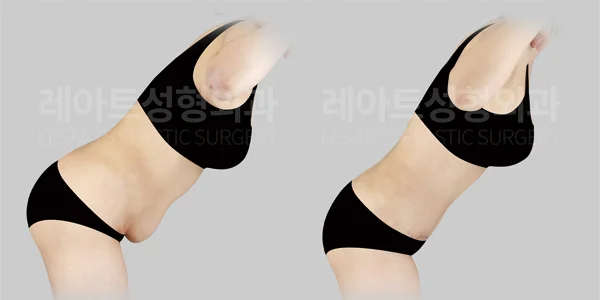
When bending forward,
the abdomen shifted outward,
appearing to spill forward
due to lack of muscle support.
To improve the patient’s
abdominal condition,
the following surgical plan
was established.
1. Abdominoplasty
(S-type, umbilical floating)
– The navel was floated
without additional navel surgery,
allowing correction of skin sagging
starting from the upper abdomen.
2. Rectus muscle plication
(Diastasis recti repair)
– The separated rectus muscles
caused by pregnancy and childbirth
were tightened to reduce
abdominal protrusion
and restore abdominal wall function.
3. Abdominal liposuction + adhesion release
– Remaining subcutaneous fat
was removed to enhance
contour improvement beyond lifting alone.
– Adhesions were released
to smooth the previously
uneven abdominal surface.
Below are the 2-month postoperative photos
after abdominoplasty,
showing how the bulging abdomen
and irregular adhesions
caused by two C-sections
were corrected and refined.
[Surgical areas and suction volume]
Surgical areas:
Abdominoplasty (umbilical floating)
Abdominal wall plication
Abdominal and flank liposuction volume:
2,900 cc
Through this surgery,
the patient aimed to improve
overall abdominal irregularity
and abdominal protrusion caused by
two C-section deliveries.
These changes included
lower-abdominal skin sagging,
diastasis recti extending
from the upper abdomen,
and tissue adhesions affecting
the entire abdominal contour.
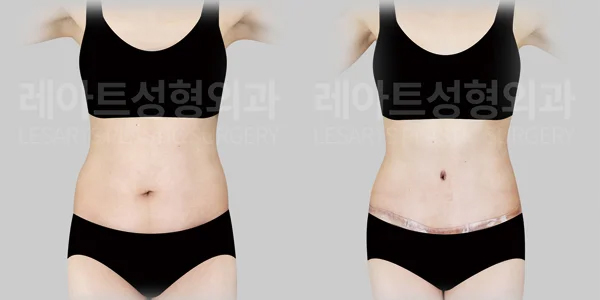
Although postoperative swelling and
bio-bond firmness were
still present at this stage,
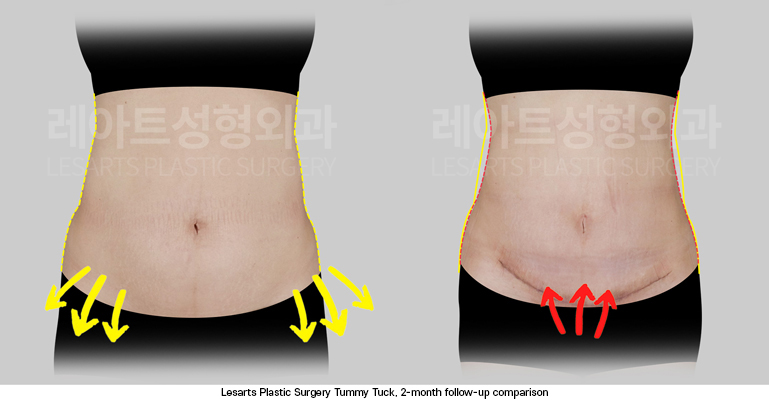
the front-view comparison
taken at two months post-surgery
showed clear improvement.
The uneven texture felt
in the lower abdomen
and the flank lines
appeared smoother,
more stable,
and more balanced.
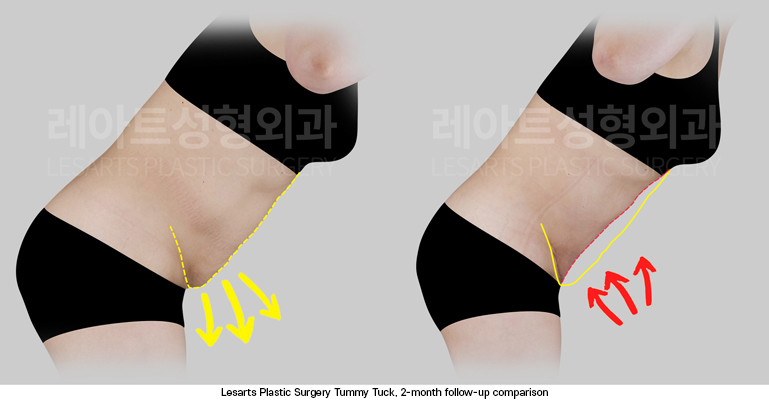
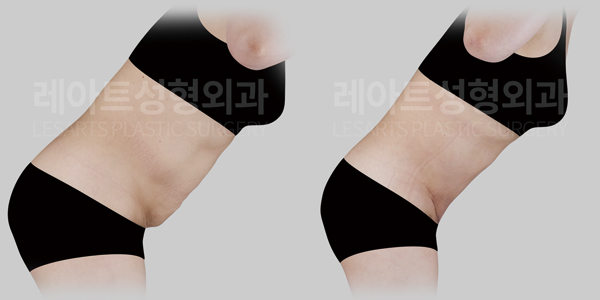
In photos taken
while bending forward,
before surgery,
the skin folded
over the C-section scar,
and from the upper abdomen,
the abdominal wall support
was weakened,
causing the skin to collapse downward
by gravity.
At the same posture,
two months after abdominoplasty,
the overlapping sagging skin
was clearly lifted,
with no visible drooping,
and the abdominal wall,
which had lost fixation,
was firmly corrected
into a stable contour.
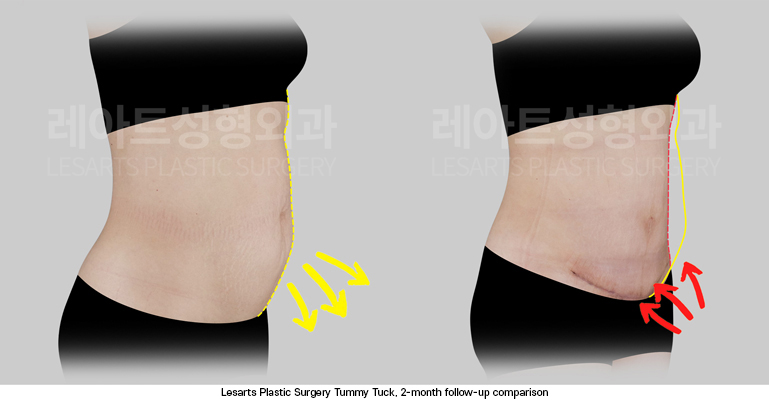
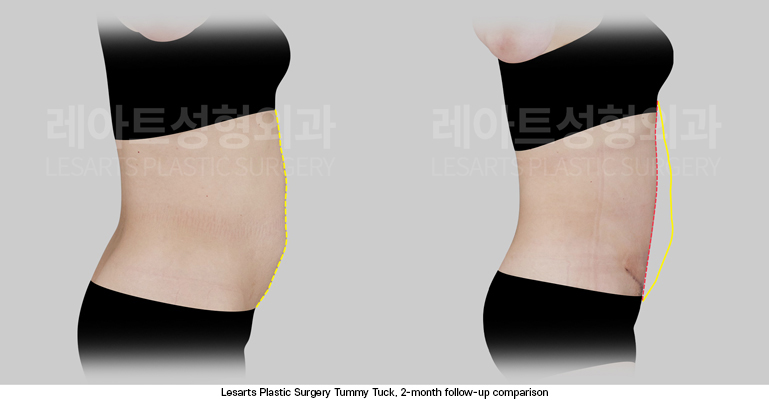
In this patient,
tissue adhesions were
clearly visible,
making the skin surface uneven.
Both upper and lower abdomen,
protrusion and sagging appeared
in an irregular, bumpy form,
creating a heavier, bulkier impression
overall.
However, two months after abdominoplasty
performed with simultaneous adhesion release,
you can see clear improvement.
Through skin lifting
and rectus muscle correction,
the abdomen changed into a
smooth and clean abdominal line.
At present, the incision site
is showing stable healing,
and with continued care for
overall swelling,
contour management,
and long-term scar care,
an even more natural
and well-finished abdominal contour
can be expected.
#BestTummyTuckClinicInKorea
#Abdominoplasty
#StypeAbdominoplasty
#UmbilicalFloating
#RectusMusclePlication
#DiastasisRectiRepair
#AbdominalLiposuction
#AdhesionRelease
#CsectionScarCorrection
#LowerAbdomenSagging
#AbdominalProtrusion
#LesartsPlasticSurgery