Gynecomastia surgery in Korea – Will there be sagging after surgery in your 40s? | Lesarts Plastic Surgery
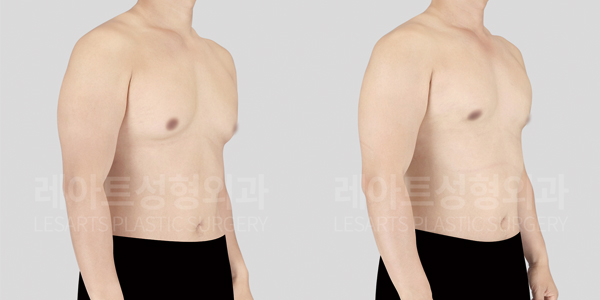
Patient Registration Info
| Age | Weight | Height | BMI |
|---|---|---|---|
|
40s |
72kg |
170cm |
25 |
Surgical site
Surgical area: Gynecomastia | Grade 2-A
Many men also experience physical changes
caused by hormonal shifts
as they get older.
Unlike in younger years,
the body does not function the same,
and unexpected changes in appearance
may begin to appear.
Among these, gynecomastia—
where the chest becomes enlarged—
is a concern that many middle-aged men face,
but often find difficult to talk about openly.
In most cases, people assume it is simply
due to weight gain with age,
and try to manage it through
exercise or dieting.
However, when gynecomastia develops
because of hormonal imbalance,
these methods usually do not lead
to noticeable improvement.
For men troubled by middle-aged
gynecomastia, or those seeking treatment,
an accurate diagnosis is essential.
This includes evaluating not only
hormonal changes,
but also the effects of medications
such as hair-loss drugs,
as well as possible
endocrine disorders.
Rather than leaving the condition untreated
for too long,
receiving a medical evaluation
and establishing the right treatment plan
can improve gynecomastia symptoms
and also help prevent
further skin sagging
or wrinkle formation.
Today, through the case of a patient
who struggled with gynecomastia
for over 20 years and decided to pursue treatment
in his late 40s,
we will explain the treatment results
for middle-aged gynecomastia.
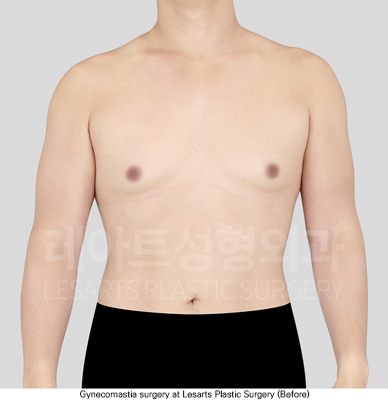
The patient had experienced
chest enlargement since his 20s,
and the protruding chest shape
became a major source of stress.
He shared that after entering the military,
the discomfort caused by gynecomastia
became even more difficult to manage.
To relieve the symptoms,
he tried weight control
and chest muscle workouts,
but the chest size did not decrease.
Because the shape also did not change,
the psychological burden
and sense of withdrawal
continued for a long time.
He had already been diagnosed
with true gynecomastia
at another hospital.
However, because he had struggled
for years with correcting the chest shape,
he decided to pursue treatment
at a plastic surgery clinic
and visited Lesarts Plastic Surgery.
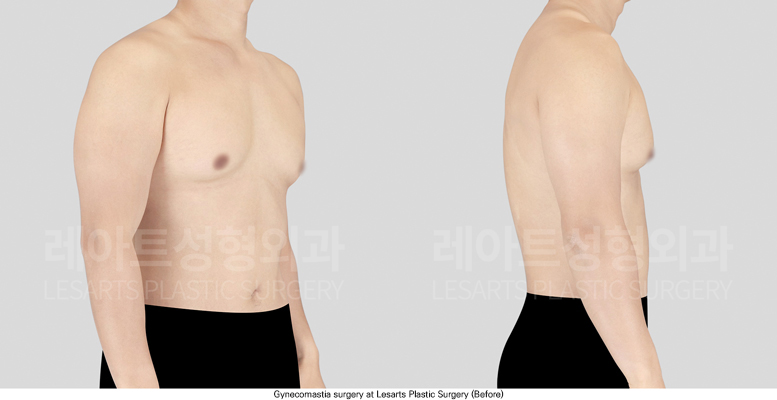
Even by visual inspection,
both sides of the chest appeared enlarged,
with a clearly protruding shape.
On palpation, a firm lump
was felt directly beneath the nipple,
and ultrasound confirmed
that this area was overgrown glandular tissue.
A thick fat layer was also observed
along the lower and lateral chest,
which contributed to the overall chest size.
The patient was diagnosed
with true gynecomastia,
classified as Simon Grade 2A,
meaning both the glandular tissue
and excess fat required surgical reduction.
[Late 40s male, Simon Grade 2A, Gynecomastia Surgical Plan]
1. Gynecomastia gland removal
Through an areolar incision,
the glandular tissue—the main cause
of chest enlargement—was removed
to create a flatter, natural male chest.
2. Gynecomastia liposuction
Chest liposuction was performed
on the lower and lateral chest
to reduce volume and form
a smooth, natural contour.
3. Tissue rearrangement to prevent indentation
After gland removal,
to prevent uneven adhesion
or hollowing beneath the nipple
and areola,
the tissue was repositioned
to maintain a firm, masculine chest shape.
We will now review how the patient’s chest shape
and pre-surgical discomfort
were improved after gynecomastia surgery.
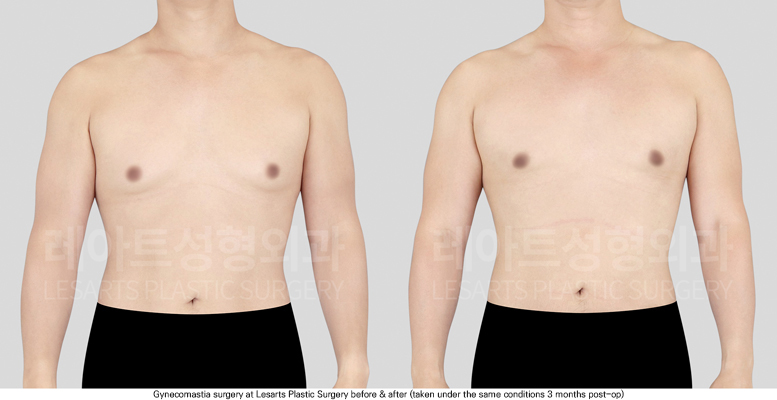
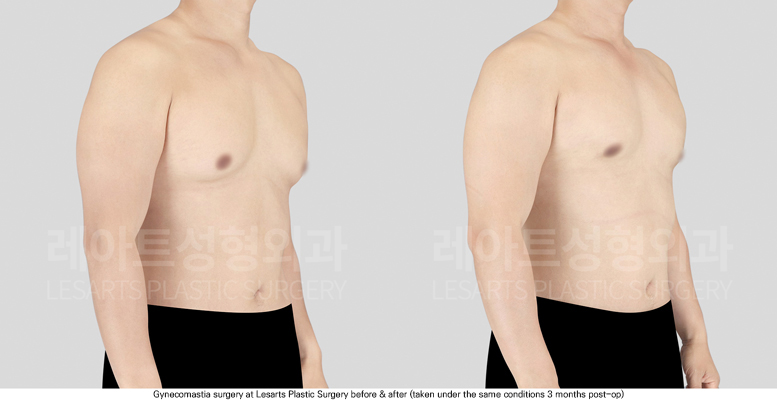
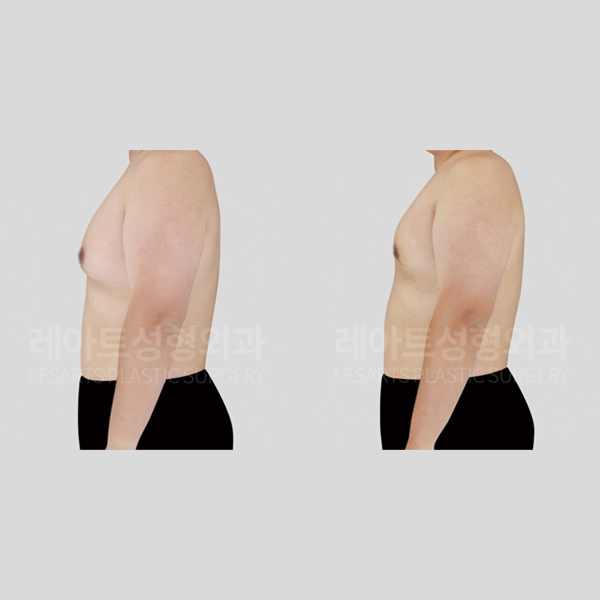
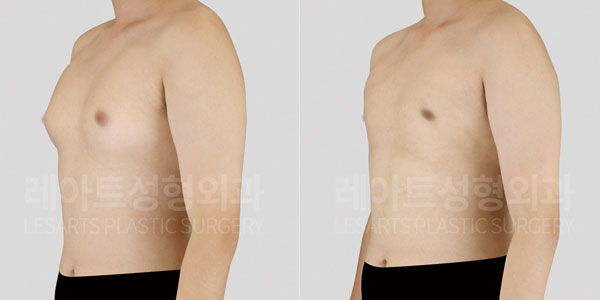
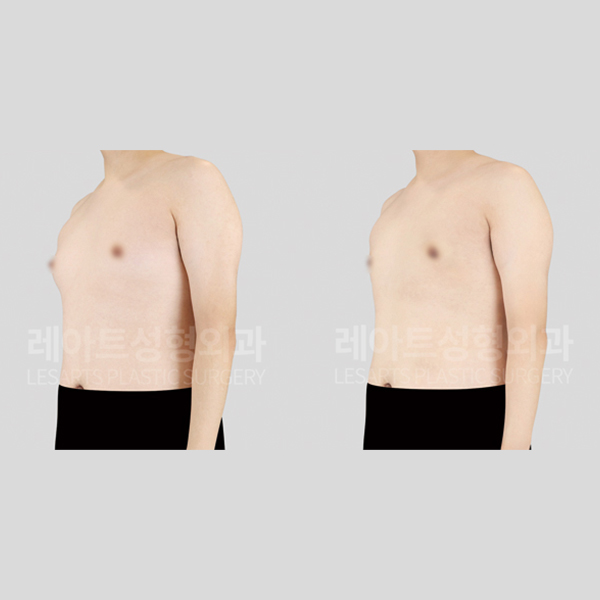
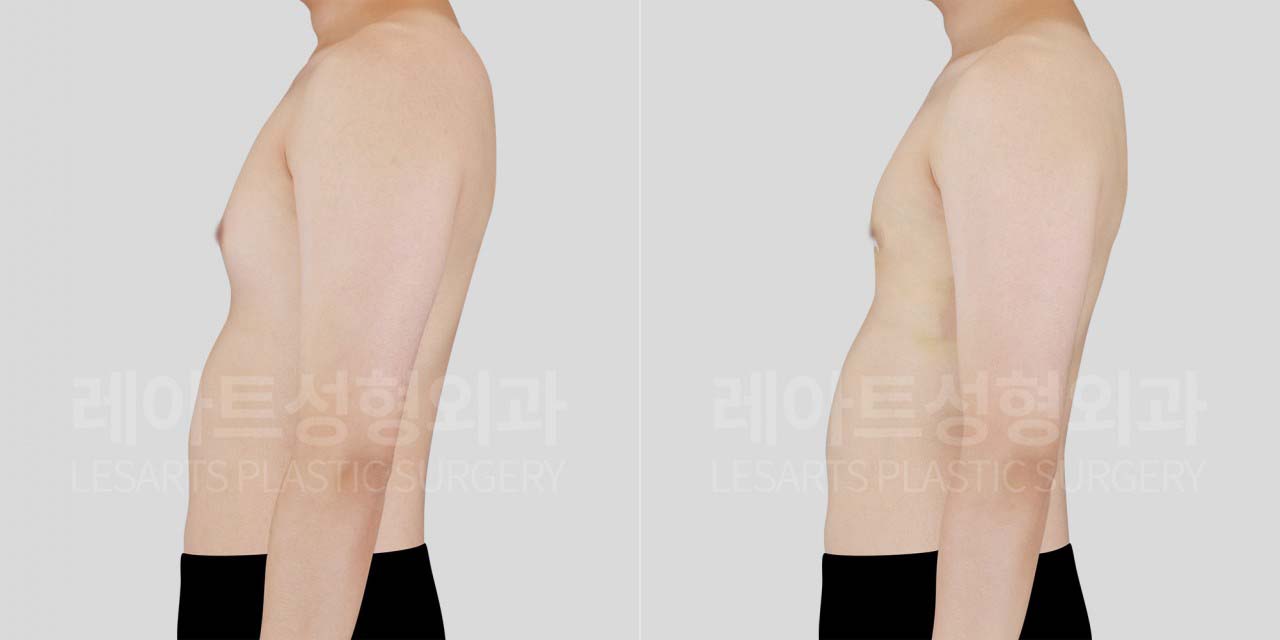
Before gynecomastia surgery,
the chest protrusion was very clear,
and despite long-term exercise
and weight control,
there had been no reduction
in chest size at all.
Through surgery, the glandular tissue
was removed, and liposuction
of the lower and lateral chest
directly corrected the areas
where bulging was most noticeable.
As a result, the chest volume
decreased visibly,
and the shape transformed into
a flatter, natural, and masculine contour.
With gynecomastia surgery,
the long-standing complex
the patient had carried
for over 20 years
was finally resolved.
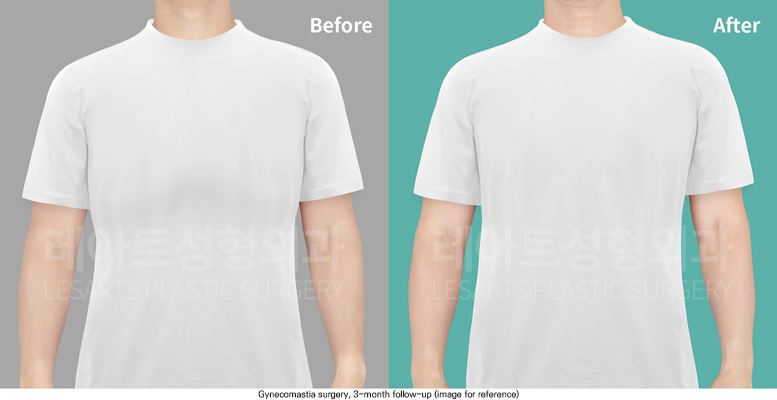
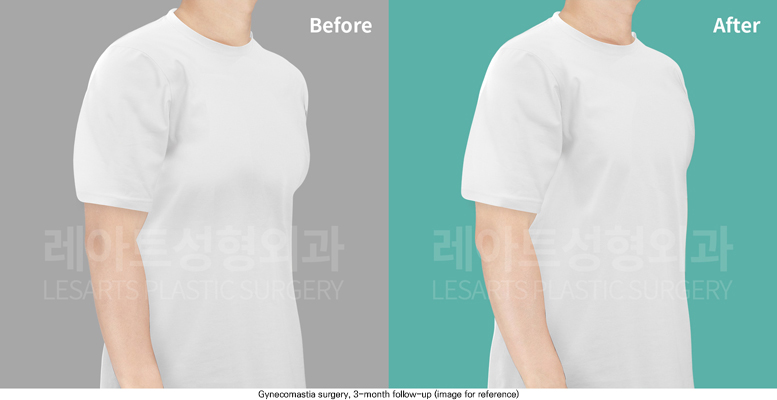
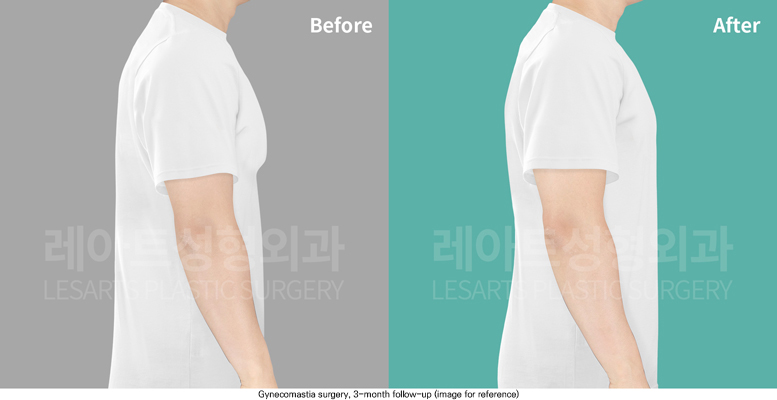
Even while wearing a plain white T-shirt,
it is clear that the patient’s
everyday concern has been
cleanly resolved.
At 3 months after gynecomastia surgery,
there is no embarrassing protrusion,
and the chest shows a natural,
firm shape that allows
a smooth and confident
T-shirt fit.
Although this patient in his late 40s
had lived with gynecomastia
for a long time before deciding
to undergo surgery,
it is important to remember that
middle-aged gynecomastia can be related
to various factors such as
hormonal changes, medications,
and endocrine disorders.
For that reason, accurate diagnosis
is essential, and we encourage
you to establish a proper
treatment plan based on
your individual condition.
#Gynecomastia
#GynecomastiaSurgery
#MaleBreastReduction
#SimonGrade2A
#MiddleAgedGynecomastia
#OvergrownGlandRemoval
#ChestContouring
#LesartsPlasticSurgery
#BeforeAndAfter
#BestGynecomastiaClinicInKorea
#BestLiposuctionClinicInKorea